


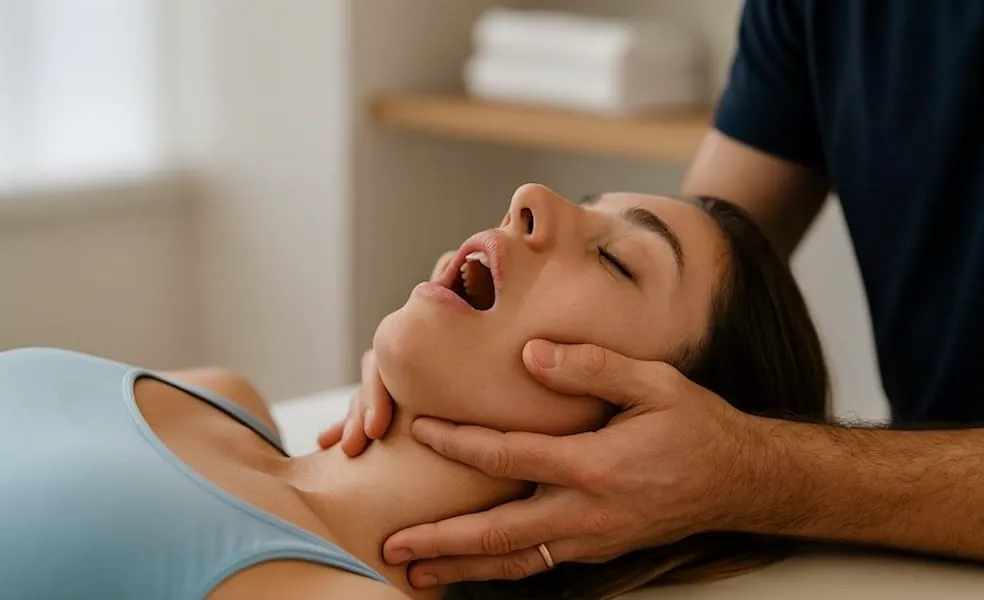
Jaw pain can make it difficult to eat, speak, or even yawn comfortably. Many people don’t realize their discomfort is connected to the temporomandibular joint, or TMJ. If you live in Denver or Centennial and struggle with TMJ pain, you’re not alone—millions of people experience jaw-related issues every year.
The good news is that conservative treatment, including targeted exercises, can make a significant difference. At TruStrength Performance and Rehab, we specialize in helping patients manage TMJ dysfunction naturally, without relying on medications or invasive procedures.
What Is TMJ Dysfunction?
The temporomandibular joint connects your jawbone to your skull. This joint allows you to talk, chew, and move your jaw side to side. When it becomes irritated or imbalanced, you may experience what’s known as TMJ dysfunction (or TMD).
Common symptoms include:
- Pain or tenderness in the jaw or around the ear
- Clicking, popping, or grinding sounds when opening or closing your mouth
- Headaches or facial pain
- Limited jaw mobility or locking
- Neck tension related to jaw dysfunction
These issues often stem from stress, teeth grinding (bruxism), poor posture, or muscle imbalances in the head and neck.
Why TMJ Exercises Work
Like other joints in the body, the TMJ is surrounded by muscles that control movement. If these muscles are weak, tight, or uncoordinated, the joint suffers. Exercises help by:
- Improving jaw mobility
- Reducing tension in overactive muscles
- Strengthening stabilizing muscles
- Correcting faulty movement patterns
- Relieving pain through gentle activation
For many patients, the right exercises—combined with lifestyle changes and physical therapy—can significantly reduce pain and restore function.
Effective TMJ Exercises You Can Try
Below are some of the most commonly prescribed exercises for TMJ dysfunction. These should be performed slowly and comfortably, without forcing motion.
Controlled Opening
- Sit or stand tall with good posture.
- Place your tongue on the roof of your mouth.
- Slowly open your mouth as far as you can without pain or clicking.
- Close your mouth slowly.
- Repeat 5–10 times.
This helps train the jaw to open smoothly without shifting to one side.
Resisted Opening
- Place your thumb under your chin.
- Open your mouth slowly while gently resisting with your thumb.
- Hold for 3–6 seconds.
- Relax and repeat 5–10 times.
This strengthens the jaw-opening muscles.
Resisted Closing
- Place two fingers on top of your chin.
- Close your mouth slowly while applying gentle resistance.
- Hold for 3–6 seconds.
- Repeat 5–10 times.
This builds strength in the jaw-closing muscles, which are often overused but not well-coordinated.
Side-to-Side Jaw Movement
- Place a thin object, such as a tongue depressor or pen, between your front teeth.
- Slowly move your jaw side to side against the object.
- Repeat for 10 reps in each direction.
This promotes lateral mobility and balance.
Forward Jaw Movement
- Place a thin object between your teeth.
- Slowly slide your jaw forward so that your bottom teeth move in front of your top teeth.
- Hold for 2–3 seconds.
- Repeat 5–10 times.
This improves forward mobility of the TMJ.
Posture and Breathing for TMJ Relief
Many people with TMJ dysfunction also have poor posture, especially forward head position from long hours at a desk. This posture places extra strain on the jaw and neck muscles.
Incorporating posture correction and breathing techniques can enhance the benefits of jaw exercises:
- Practice sitting tall with shoulders relaxed and chin tucked slightly.
- Perform diaphragmatic breathing to reduce tension in the neck and jaw.
When to See a Professional
TMJ exercises are safe and effective for many people, but professional guidance is important if:
- You experience sharp pain, locking, or severe restriction.
- Symptoms do not improve after several weeks of exercises.
- You have frequent headaches, ear ringing, or neck pain associated with TMJ dysfunction.
Physical therapy provides a comprehensive approach, including manual therapy, posture correction, and education tailored to your specific condition.
How Physical Therapy in Denver Can Help
At TruStrength Performance and Rehab, we take a holistic approach to TMJ dysfunction. Our treatment may include:
- Manual therapy to release tight muscles in the jaw and neck
- Dry needling or soft tissue techniques to reduce pain
- Custom exercise programs to retrain jaw movement
- Education on posture, sleep habits, and stress management
We bridge the gap between medical treatment and functional training so you can get lasting results.
Learn more about our specialized TMJ therapy in Denver.
Frequently Asked Questions About TMJ Exercises
1. How often should I do TMJ exercises?
Most exercises can be performed daily, but consistency is more important than volume. A few minutes each day can provide results over time.
2. Can TMJ exercises cure my jaw pain completely?
They can significantly reduce symptoms, but long-term relief often requires addressing stress, posture, and other contributing factors.
3. Are TMJ exercises safe during pregnancy?
Yes, they are safe and non-invasive. If you are pregnant and experiencing TMJ pain, these exercises can be a good option before pursuing other treatments.
4. Should I use heat or ice for TMJ pain?
Heat can help relax tight muscles, while ice can reduce inflammation. Many patients benefit from alternating both.
5. Do I need a referral for TMJ physical therapy?
In Colorado, most patients can see a physical therapist directly without a physician referral.
Final Thoughts
TMJ dysfunction can be painful and frustrating, but the right exercises can improve mobility, reduce discomfort, and restore normal jaw function. When combined with professional physical therapy, lifestyle changes, and stress management, the results are even more powerful.
If you’re dealing with TMJ issues in Denver or Centennial, TruStrength Performance and Rehab can help you regain comfort and function.
Schedule your appointment today to start your path toward a pain-free jaw and a healthier life.