


Dealing with the nagging, sharp pain of shin splints can bring your training to a grinding halt. If you are looking for dry needling for shin splints, you’ve likely tried ice, rest, and stretching with little success. At TruStrength Performance and Rehab, we see this frustration daily among the active running community in Denver and Centennial.
Shin splints aren’t just a minor annoyance; they are a sign that your muscles and bones are struggling to handle the stress of your activity. While traditional methods take time, dry needling offers a modern, effective way to release muscle tension, stimulate healing, and get you back on the pavement faster.
Understanding Shin Splints (Medial Tibial Stress Syndrome)
Before diving into how needles can help, it’s important to understand what is actually happening in your lower leg. Shin splints, medically known as Medial Tibial Stress Syndrome (MTSS), involve inflammation of the muscles, tendons, and bone tissue around your tibia (shin bone).
This usually occurs when the muscles in the front of your lower leg (the anterior tibialis) or the back of your leg (the posterior tibialis and soleus) are overworked. This overuse creates tight bands of muscle, known as trigger points, which pull relentlessly on the bone, causing that familiar throbbing pain.
Common Causes
- Ramping up mileage too quickly: The “too much, too soon” error.
- Improper footwear: Running in shoes that have lost their support.
- Running on hard surfaces: Concrete creates more impact force than trails or tracks.
- Biomechanical issues: Flat feet or overpronation can increase stress on the shin.
What is Dry Needling?
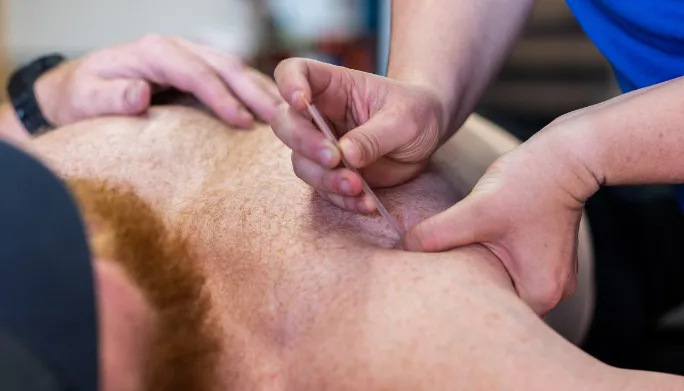
Dry needling is a technique used by physical therapists to treat pain and movement impairments. It involves inserting a thin, solid monofilament needle (similar to acupuncture needles) directly into a trigger point within the muscle.
Unlike a hypodermic needle used for injections, a “dry” needle contains no medication. The goal isn’t to inject anything, but to mechanically reset the muscle. When the needle hits the trigger point, it often elicits a “twitch response.” This twitch is the muscle contracting and then releasing, which helps to:
- Release Tension: Physically relaxes the tight muscle band pulling on the shin bone.
- Increase Blood Flow: Brings oxygen and nutrients to the injured area to speed up healing.
- Reset the Nervous System: Disrupts the pain signals being sent to the brain, providing immediate pain relief.
Can Dry Needling Help Shin Splints?
Absolutely. Dry needling for shin splints is one of the most effective treatments for resolving the muscular tightness that causes the condition.
When treating shin splints, your physical therapist will target specific muscles that are contributing to the stress on your tibia. These usually include:
- Tibialis Anterior: The muscle running along the front of your shin.
- Tibialis Posterior: A deep muscle that supports the arch of the foot.
- Soleus and Gastrocnemius: The calf muscles.
By releasing the trigger points in these muscles, the tension on the periosteum (the connective tissue covering the bone) is reduced. Once that constant pulling stops, the inflammation can subside, and the pain goes away.
Does it hurt?
Most patients report feeling a small pinch when the needle is inserted, followed by a dull ache or cramping sensation when the muscle twitches. This is a good sign—it means the trigger point is releasing. The soreness typically dissipates quickly, leaving the leg feeling lighter and more mobile.
The TruStrength Approach: More Than Just Needles
While dry needling is a powerful tool, it is rarely a standalone cure. At TruStrength Performance and Rehab, we believe in a holistic approach to recovery. We don’t just treat the symptom; we treat the athlete.
Our comprehensive physical therapy for shin splints includes:
1. Assessment and Diagnosis
We analyze your running gait, foot structure, and training load to identify why you got shin splints in the first place.
2. Manual Therapy
In addition to dry needling, we may use massage therapy or instrument-assisted soft tissue mobilization (IASTM) to further break down scar tissue and improve tissue quality.
3. Strength and Capacity Building
Weak hips or glutes often force the lower legs to work overtime. We will guide you through specific strengthening exercises to build a more resilient body, taking the pressure off your shins.
4. Functional Nutrition
Sometimes, chronic inflammation or poor bone health is related to diet. Our functional nutrition counseling can ensure your body has the fuel it needs to repair tissue and build strong bones.
Why Choose TruStrength for Your Recovery?
We are proud to serve the Denver community with top-rated care. With over 200 five-star reviews, our team is dedicated to getting you back to the activities you love. We are an out-of-network provider, which allows us to focus entirely on your needs rather than insurance mandates, delivering high-quality, personalized care.
If you are suffering from shin splints, don’t wait until it turns into a stress fracture.
- Schedule an appointment at one of our convenient locations:
Frequently Asked Questions
How many sessions of dry needling do I need for shin splints?
Every patient is unique, but many experience relief after just 1-3 sessions. For lasting results, we typically recommend a course of treatment over 4-6 weeks combined with strengthening exercises.
Is dry needling the same as acupuncture?
No. While the needles are similar, the philosophy is different. Acupuncture is based on Traditional Chinese Medicine and energy meridians. Dry needling is based on Western medicine, anatomy, and neurophysiology to treat musculoskeletal pain.
Can I run after dry needling?
We generally recommend taking it easy for 24 hours after a session, as your muscles may feel like they’ve had a heavy workout. Your therapist will provide a specific plan based on your pain levels.
Do I need a doctor’s referral for dry needling in Colorado?
No. Colorado is a direct access state, meaning you can come directly to a physical therapist for evaluation and treatment without a physician’s referral.
Take the Next Step Toward Pain-Free Running
You don’t have to run through the pain. Dry needling for shin splints can provide the relief you need to get back on track.
Ready to recover? Contact us today to schedule your evaluation.