


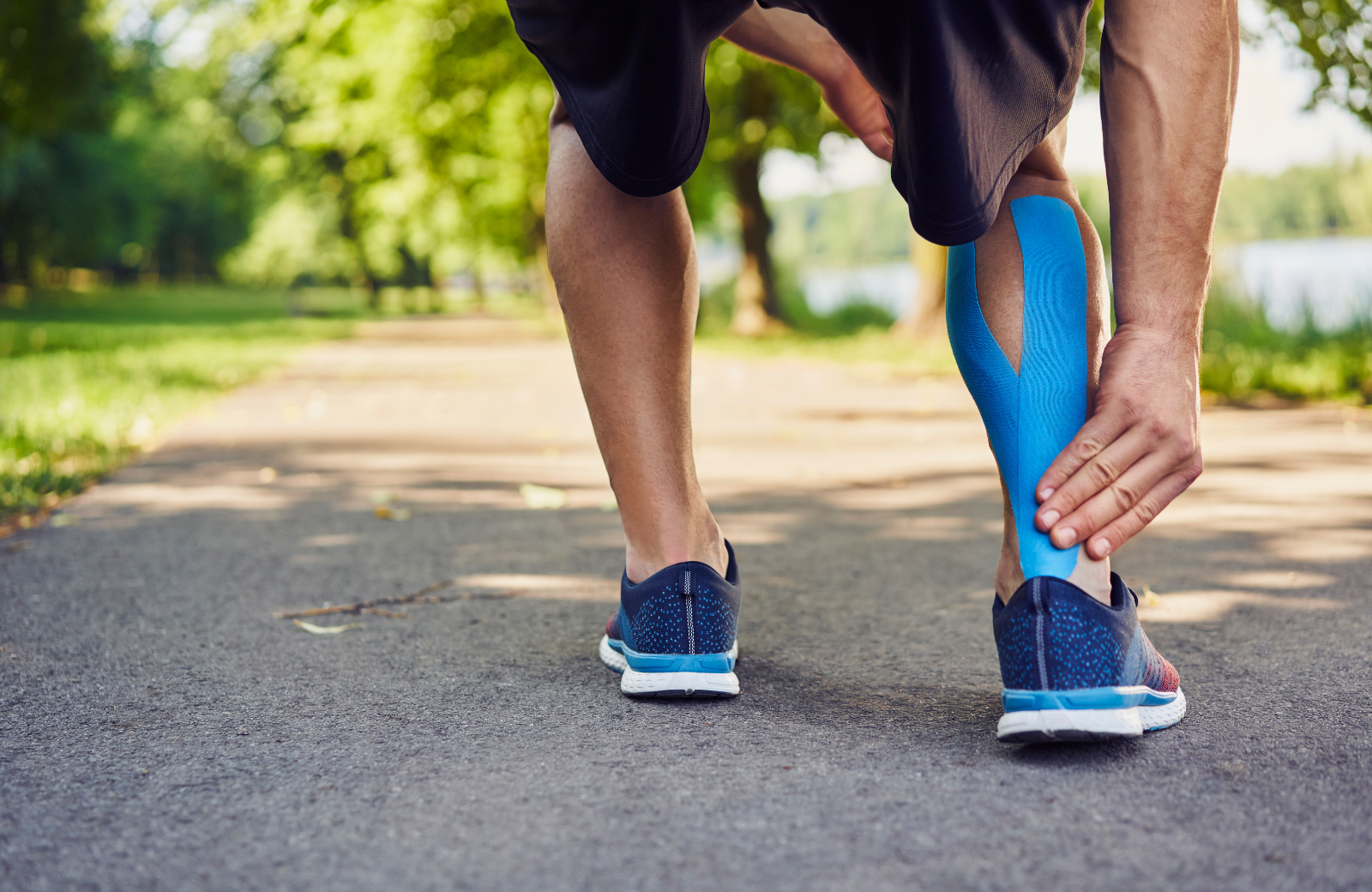
Achilles tendonitis exercises work when they load the tendon on purpose, not when they rest it into weakness. Your tendon gets stronger from slow, progressive calf work that you repeat for weeks.
That answer surprises most runners and lifters we see around Denver. You feel a hot, stiff ache just above the heel, you back off training, and the pain quiets down. Then it returns the first mile back.
Rest calms the irritation. It does not build the capacity the tendon lost. Loading does that, and loading is something you can start today at home.
Here is what actually moves the needle, in order of importance.
- Start slow calf raises on both feet, three sets of twelve, once a day.
- Keep pain at or under a three out of ten during the work and the next morning.
- Track morning stiffness. Less stiffness on waking is your best early progress marker.
- Add load before you add speed or mileage.
- Give the plan eight to twelve weeks of steady work before you judge it.
Below we walk through what causes the problem, which exercises to run first, how the timeline really looks, and how we progress people in the clinic so they keep training while the tendon rebuilds.
What Causes Achilles Tendonitis In Active Adults?
Achilles tendonitis comes from repeated stress that outpaces the tendon’s ability to adapt. It is rarely one bad step and almost always a pattern of too much, too soon.
The American Academy of Orthopaedic Surgeons notes in its patient guide to Achilles tendinitis that the problem typically has no single injury behind it and instead results from repetitive stress when we push our bodies to do too much, too quickly. That matches what we see every week.
Training Load That Climbs Too Fast
A jump in weekly mileage is the most common trigger. Adding hill repeats, speed work, and distance in the same two week block stacks the odds against you.
Denver adds its own wrinkle. Trail running, altitude, and a long outdoor season mean people ramp quickly in spring and pay for it by June.
Calf Muscles That Cannot Handle The Job
Tight or underbuilt calves push more work onto the tendon. Your soleus in particular absorbs enormous force during running, and when it fatigues the Achilles takes the difference.
Ankle stiffness plays a role too. If your ankle cannot bend forward much, the tendon gets loaded at a sharper angle every stride.
Shoe And Surface Changes
Dropping from a cushioned trainer into a flatter shoe raises Achilles demand right away. So does switching from soft trail to concrete, or from treadmill to road.
None of these changes are wrong. They just need a runway of two to four weeks instead of a single weekend.
How Do You Know If It Is Achilles Tendonitis Or Something Else?
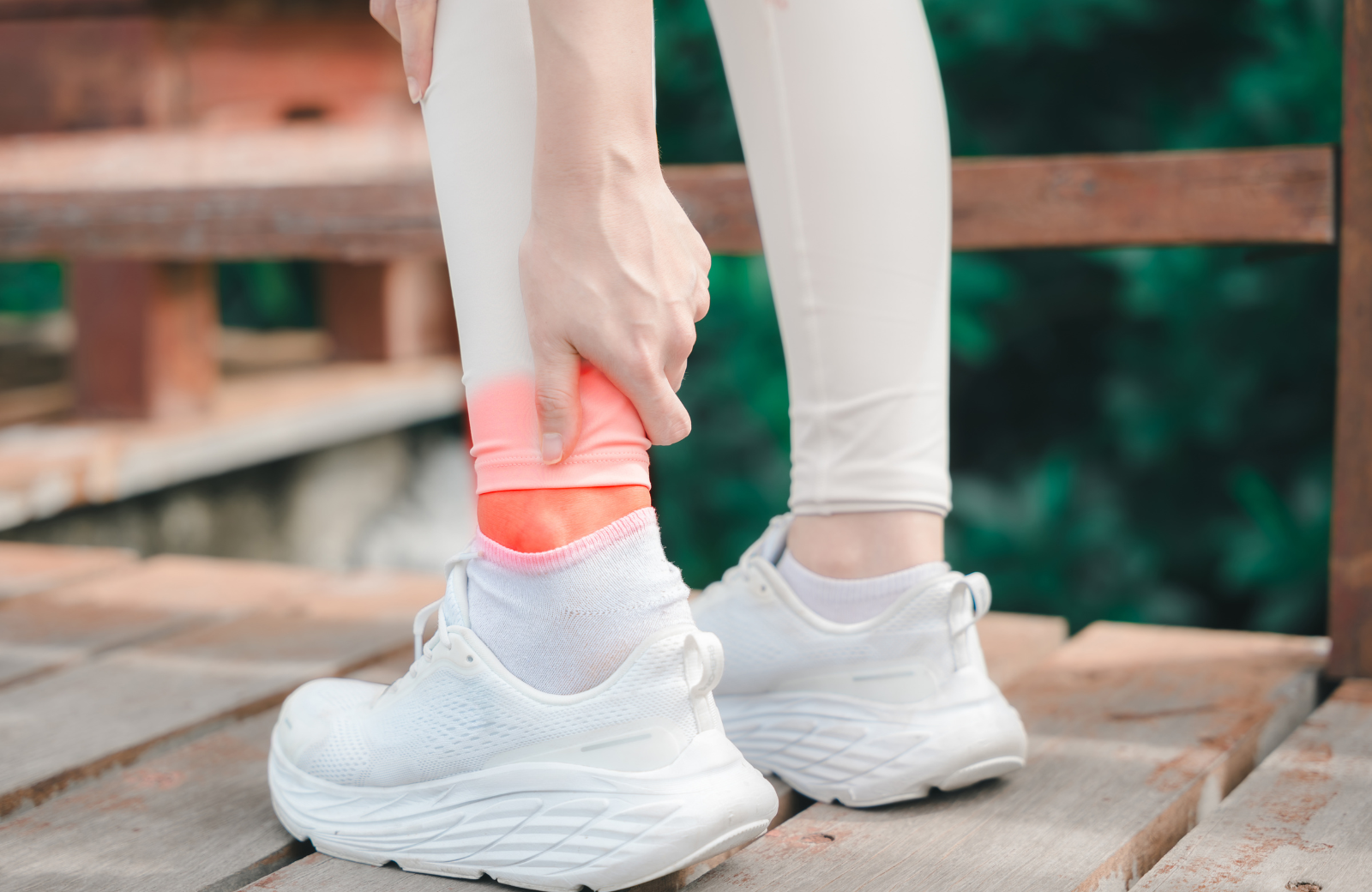
Achilles tendonitis usually announces itself with morning stiffness in the back of the heel that eases as you move. Pain sits directly on the tendon and you can often press on the sore spot with one finger.
MedlinePlus, from the National Library of Medicine, describes the classic pattern of Achilles tendinitis as pain along the tendon with walking or running, an area that feels painful and stiff in the morning, and trouble standing up on the toes.
The Signs That Point Toward Tendon Irritation
- Stiffness in the first ten minutes after waking that loosens with walking.
- Pain that warms up during a run and returns worse afterward.
- A tender, sometimes thickened band you can pinch between two fingers.
- Discomfort when you hop or push off the toes.
The Signs That Need A Same Day Call
A sudden pop in the calf or heel with immediate weakness is different. That pattern raises concern for a tear and deserves prompt evaluation, not a home exercise plan.
Numbness, tingling into the foot, or night pain that never settles also belongs in a clinic. We would rather rule something out early than chase the wrong problem for a month.
Which Achilles Tendonitis Exercises Should You Start With?

Start with slow, controlled calf raises on both feet and build from there. Speed and single leg work come later, once the tendon proves it can handle steady load.
Here is the progression we hand people most often. Move to the next step only when the current one feels easy and your morning stiffness holds steady or improves.
Step One: Isometric Calf Holds
Stand with both feet flat, rise onto the balls of your feet, and hold for thirty to forty five seconds. Repeat four to five times, once or twice a day.
Isometrics often take the edge off pain within a session. They are the right entry point when the tendon feels angry and reactive.
Step Two: Slow Double Leg Calf Raises
Rise up over three seconds, pause at the top for one, lower over three seconds. Three sets of twelve, once a day.
Do these flat footed on the ground at first. Keep your knees straight for one set and slightly bent for another so you hit both the gastrocnemius and the soleus.
Step Three: Heel Drops Off A Step
Once double leg raises feel easy, move to a stair. Rise with both feet, shift your weight to the sore side, and lower slowly over three to four seconds.
Three sets of fifteen, once daily. Add a backpack with five to ten pounds when you can complete all sets without a rise in next morning stiffness.
Step Four: Loaded Single Leg Work
Now the tendon is ready for real strength. Single leg calf raises with dumbbells, seated calf raises for the soleus, and slow split squats build the capacity that protects you when mileage climbs.
Two to three sessions a week is enough at this stage. Heavy and slow beats light and fast for tendon health.
Step Five: Spring And Bounce
The last piece restores the tendon’s ability to store and return energy. Pogo hops, skipping, and short strides bring back the stiffness a runner needs in a good way.
Keep the volume small and the quality high. Twenty to forty contacts, twice a week, is a sensible starting dose.
How Do Insertional And Noninsertional Achilles Tendonitis Exercises Differ?
The location of your pain changes which exercises help and which ones aggravate. Pain at the very back of the heel bone needs a gentler stretch position than pain in the middle of the tendon.
AAOS separates the two types clearly: noninsertional tendinitis affects the middle portion of the tendon and is most common in younger, active people, while insertional tendinitis involves the lower portion where the tendon attaches to the heel bone. Their guidance is direct about heel drops, noting that these exercises should be performed only for noninsertional Achilles tendinitis.
| Feature | Noninsertional | Insertional |
|---|---|---|
| Where it hurts | Two to six centimeters above the heel bone | Right at the back of the heel bone |
| Who tends to get it | Younger runners and jumpers | Any age, often with tight calves |
| Heel drops below level | Appropriate once tolerated | Avoid early, they compress the insertion |
| Better starting position | Off a step, full range | Flat ground or a small heel lift |
| Shoe strategy | Normal trainer | Slight heel lift, softer heel counter |
| Deep calf stretching | Usually fine | Often irritating early on |
If you are not sure which type you have, start flat footed. You lose nothing by beginning on the ground, and you avoid weeks of unnecessary flare ups.
How Long Does It Take For Achilles Tendonitis Exercises To Work?
Expect meaningful change in eight to twelve weeks, with the first improvements in morning stiffness around week three or four. Tendons remodel slowly, and that timeline is normal rather than a sign of failure.
MedlinePlus is blunt about the pace, stating that it may take at least two to three months for the pain to go away. AAOS echoes it, noting that even with early treatment the pain may last longer than three months.
| Phase | Typical Window | Focus | What Progress Looks Like |
|---|---|---|---|
| Calm the tendon | Weeks 1 to 2 | Isometric holds, load management | Pain settles faster after activity |
| Build base strength | Weeks 3 to 6 | Slow double leg raises, heel drops | Morning stiffness drops noticeably |
| Load heavier | Weeks 6 to 10 | Weighted single leg work | Stairs and hills stop bothering you |
| Restore spring | Weeks 10 to 14 | Hops, skips, strides | Running feels springy again |
| Return to full training | Weeks 12 and beyond | Mileage and intensity rebuild | Two strength sessions weekly hold the gains |
These windows overlap in real life. Someone who caught it in week two of symptoms often moves faster than someone who trained through it for a year.
Can You Keep Running While You Rehab Your Achilles?
In most cases yes, with adjustments. Complete rest is rarely the right answer, and it costs you fitness you will have to rebuild anyway.
We use a simple pain rule with athletes. Keep discomfort at or below a three out of ten during the run, and require that it settles within twenty four hours without an increase in morning stiffness.
What To Change First
- Cut hills and speed work before you cut easy mileage.
- Shorten runs rather than dropping run days entirely.
- Run on flatter, softer surfaces for a few weeks.
- Move some volume to the bike, pool, or elliptical.
When To Pull Back Harder
Rising morning stiffness across three consecutive days means the load is too high. Drop volume by a third and hold there for a week before rebuilding.
Pain that climbs during a run instead of warming up is another stop sign. That pattern usually means the tendon is past its capacity for that day.
What Mistakes Slow Achilles Tendon Recovery?
The most common mistake is stopping the exercises once the pain fades. Tendon capacity keeps building for weeks after symptoms quiet down, and quitting early is how people end up back at square one in the spring.
Chasing Stretching Instead Of Strength
Stretching can feel great and it has a place, especially for tight calves. It does not build tendon capacity on its own.
If you only have ten minutes, spend them on slow calf raises. Save stretching for after.
Going Too Fast Too Soon
Fast, bouncy calf raises early in the process load the tendon in the way it tolerates least. Slow tempo is not a beginner version of the exercise. It is the point.
Reaching For Injections Early
AAOS advises against cortisone injections into the Achilles tendon because they can cause the tendon to rupture, and research has shown significantly decreased tendon strength after steroid injection. That is a strong reason to give loading a real chance first.
Ignoring The Rest Of The Chain
Weak hips and a stiff big toe change how you push off. We check the whole leg because the Achilles is often the loudest link, not the weakest one.
How Do We Progress Achilles Tendonitis Exercises In The Clinic?
We measure first, then load. A calf raise test, ankle mobility screen, and a look at your running or lifting mechanics tell us where the gap is.
We Start With Objective Numbers
How many single leg calf raises can you do to full height before form breaks down? Most healthy runners manage well over twenty on each side. Knowing your starting number turns a vague plan into a target.
We retest every few weeks so you can see the change instead of guessing at it. Numbers keep people patient during the slow middle stretch.
We Adjust Load, Not Just Exercises
Sets, tempo, range, and weight all get dialed to your response. Two people with the same diagnosis often run very different programs.
Hands on work has a supporting role here. Our manual therapy and dry needling options help calm a reactive calf so you can do the strength work that changes the tendon.
We Look At How You Move
A gait analysis often explains why one Achilles keeps flaring while the other stays quiet. Cadence, foot strike, and hip control all shift the demand on the tendon.
Small mechanical changes plus real strength work outlast either one alone.
Frequently Asked Questions
Should Achilles Tendonitis Exercises Hurt?
Mild discomfort during the work is acceptable and often unavoidable. Keep it at or under a three out of ten, and require that it settles within twenty four hours. Pain that spikes the next morning means the load was too high for that day.
How Often Should You Do Achilles Tendonitis Exercises?
Daily in the early phases, then two to three times a week once you move to heavier single leg work. The tendon responds to frequent, moderate loading early and to heavier, less frequent loading later. Consistency matters more than any single session.
Is Walking Good For Achilles Tendonitis?
Walking is usually helpful because it keeps blood flow and gentle load moving through the tendon. Flat routes are easier than hills, and supportive shoes make a difference. If walking leaves you stiffer the next morning, shorten the distance rather than stopping entirely.
Do You Need An MRI For Achilles Tendonitis?
Most people do not. Imaging rarely changes the plan for a straightforward tendon problem, since the treatment is loading either way. Imaging becomes useful when a tear is suspected or when months of good rehab produce no change.
Can You Lift Weights With Achilles Tendonitis?
Yes, and lifting often helps. Squats, deadlifts, and leg press are usually well tolerated because they load the calf without the impact of running. Jumping, sprinting, and deep heel elevated positions are the ones to modify first.
What Is The Difference Between Achilles Tendonitis And Tendinopathy?
Clinically the terms overlap. AAOS notes that tendinitis, tendinosis, and tendinopathy are all common terms which essentially refer to the same problem. Tendinopathy is the broader word for a tendon that has changed under chronic load, and the treatment approach stays the same.
How We Help Denver Athletes Rebuild A Strong Achilles
You do not have to choose between healing and training. Our whole model is built around keeping you moving while the tendon rebuilds.
A Plan Built Around Your Actual Sport
A trail runner, a CrossFit athlete, and a pickleball player all need different end points. We build backward from what you want to do in eight weeks, not from a generic handout.
That is why we test, retest, and adjust. Your program should look different in week ten than it did in week one.
Care That Treats You Like An Athlete
We are licensed Doctors of Physical Therapy who work with active people every day, across our running injury and sports injury programs in Denver and Centennial. You will not be handed a sheet of exercises and left alone with it.
Sessions are hands on and one on one. We coach the tempo, watch the form, and change the dose based on how you respond.
Take The Next Step
If your Achilles has been nagging for more than a few weeks, get eyes on it. Early loading beats late loading every time, and the plan is far simpler when the tendon is less reactive.
Call us at (720) 983-3665 or request an appointment to talk through your goals and your training calendar. We will build the plan around both.