


Have you found yourself unable to reach for a cup on a high shelf or struggling to fasten your seatbelt? If your shoulder feels stiff, painful, and stuck, you might be dealing with adhesive capsulitis—more commonly known as frozen shoulder. For those searching for dry needling for frozen shoulder as a potential solution, you’ve come to the right place.
At TruStrength Performance and Rehab, we see firsthand how frustrating this condition can be. It limits your daily life, interrupts your sleep, and makes simple movements feel impossible. While traditional physical therapy is a cornerstone of recovery, many of our patients in Denver and Centennial are discovering the accelerated benefits of adding dry needling to their treatment plan.
In this guide, we’ll break down exactly what frozen shoulder is, how dry needling works to relieve it, and why this combination might be the key to unlocking your range of motion.
Understanding Frozen Shoulder (Adhesive Capsulitis)
Frozen shoulder is more than just a stiff joint. It is a condition where the connective tissue capsule surrounding the shoulder joint becomes thickened, tight, and inflamed. This leaves less room for the upper arm bone (humerus) to move within the joint socket.
The condition typically develops in three stages:
- Freezing Stage: Your shoulder begins to ache, and the pain becomes worse when you reach for things. You start losing range of motion.
- Frozen Stage: The pain might actually lessen during this phase, but the stiffness becomes severe. Using your shoulder becomes difficult, impacting daily tasks.
- Thawing Stage: The range of motion begins to improve slowly.
Without intervention, this process can drag on for a year or more. However, integrating targeted therapies can significantly shorten the timeline and reduce discomfort.
What Is Dry Needling?
Dry needling is a therapeutic technique used by certified physical therapists to treat muscle pain and movement impairments. Unlike acupuncture, which is based on traditional Chinese medicine and energy meridians, dry needling is strictly based on Western anatomical and neurophysiological principles.
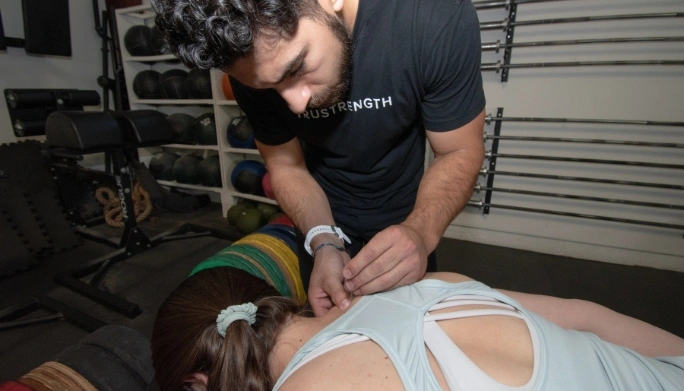
During a session, a therapist inserts a thin, sterile filament needle directly into a “trigger point” within a muscle. A trigger point is a taut band of skeletal muscle located within a larger muscle group—essentially, a knot that won’t release.
When the needle enters this trigger point, it elicits a “twitch response.” This response helps to:
- Release the tight muscle band.
- Decrease pain signals sent to the brain.
- Restore normal muscle function.
- Improve blood flow to the area to promote healing.
How Dry Needling for Frozen Shoulder Works
When it comes to dry needling for frozen shoulder, the goal is to target the muscles surrounding the shoulder joint that have become tight and overactive due to the inflammation of the capsule.
When you have a frozen shoulder, your body tries to protect the joint by tightening the surrounding muscles (like the rotator cuff, upper trapezius, and deltoid). This protective mechanism actually contributes to the pain and stiffness.
By applying dry needling to these specific areas, our therapists at TruStrength can help relax these guarding muscles. This provides immediate pain relief and creates a “window of opportunity” where the shoulder is more mobile and less painful. This allows for more effective manual therapy and exercise during your physical therapy session.
The Benefits of Combining Therapies
Dry needling is rarely a standalone cure; it works best as part of a comprehensive plan. At our clinics in Steele St (Denver) and Centennial, we use dry needling to “reset” the muscle, followed immediately by functional exercises to “retrain” the movement.
Benefits include:
- Faster Pain Relief: Many patients report immediate reduction in pain levels.
- Improved Range of Motion: Releasing tight muscles allows the joint to move more freely.
- Accelerated Recovery: improved blood flow and reduced muscle tension can speed up the “thawing” process.
Is Dry Needling Painful?
This is the most common question we get. The needle used is incredibly thin—much thinner than a hypodermic needle used for vaccines. Most patients do not feel the needle being inserted.
When the therapist hits the trigger point, you may feel a brief twitch or a deep ache, which is often described as a “good hurt,” similar to a deep tissue massage. This sensation is a sign that the treatment is working. After the session, you might feel some muscle soreness for 24 to 48 hours, but this usually fades quickly, leaving the shoulder feeling looser.
Safety and Effectiveness
Dry needling is a safe, effective treatment when performed by trained professionals. At TruStrength Performance and Rehab, our Doctors of Physical Therapy are highly trained in dry needling techniques specifically for orthopedic conditions like frozen shoulder.
While there are minor risks associated with any procedure (such as temporary soreness or minor bruising), serious side effects are extremely rare. We always conduct a thorough assessment to ensure you are a good candidate for the treatment before we begin.
Why Choose TruStrength for Your Recovery?
Recovering from frozen shoulder requires a roadmap. You need to identify the root cause, control the pain, and rebuild capacity. We don’t believe in a one-size-fits-all approach.
Whether you visit us in South Denver or our South Broadway location, you receive a customized plan. We specialize in active-focused physical therapy. This means we won’t just treat you on the table; we teach you how to modify your movements so you can keep participating in the activities you love, even while you recover.
If you are dealing with other issues alongside your shoulder pain, such as chronic back pain or sports injuries, we can address those simultaneously to get you back to peak performance.
Taking the First Step Toward Relief
Living with a frozen shoulder can feel limiting, but you don’t have to wait months for it to “thaw” on its own. By combining dry needling with specialized physical therapy, you can reclaim your range of motion and get back to your daily life pain-free.
If you are in the Denver or Centennial area and want to see if this treatment is right for you, we are here to help.
Frequently Asked Questions About Dry Needling
How many sessions of dry needling will I need?
The number of sessions varies depending on the severity of your frozen shoulder and how long you’ve had it. Some patients feel relief after 1-2 sessions, while others may need ongoing maintenance as part of a 4-6 week physical therapy program. Your therapist will provide a clear estimate during your initial evaluation.
Can I work out after dry needling?
Yes, in fact, we encourage movement! Because dry needling helps release tight muscles, following it up with corrective exercises is crucial. However, we may recommend lighter activities immediately following treatment if you experience soreness. We will teach you exactly how to train in the presence of your injury.
Is dry needling covered by insurance?
We operate as an out-of-network provider. This allows us to provide higher quality, one-on-one care without the restrictions often imposed by insurance carriers. However, patients can often claim out-of-network benefits. We are happy to discuss our payment options and packages with you.
What is the difference between dry needling and acupuncture?
While both use similar tools (thin needles), the philosophy and application differ. Acupuncture is based on Eastern medicine and restoring energy flow (Qi). Dry needling is based on Western medicine and targets specific anatomical trigger points to release muscle tension and reduce pain.
Start Your Recovery Journey Today
Don’t let shoulder pain dictate your life. Dry needling for frozen shoulder could be the missing link in your recovery.
Request an appointment with TruStrength Performance and Rehab today. Let’s build your strength and heal your injury together.