



Diastasis recti is a separation of the abdominal muscles along the midline of your belly, most often after pregnancy, and the encouraging news is that you can rebuild a strong, functional core with the right plan. The connective tissue between the two halves of your six-pack muscles stretches and thins, which leaves a gap and a feeling of weakness through the middle.
This is common, it is not your fault, and it responds well to focused, progressive training.
Many women notice it as a soft pooch that lingers after birth, a doming along the belly when they sit up, or a core that just feels disconnected. The good thing is that you do not have to choose between healing and staying active. Here we walk through what diastasis recti is, how to check for it, which exercises help, and when it makes sense to get guidance.
What You Need to Know About Diastasis Recti
- Diastasis recti is a separation of the abdominal muscles, most common in pregnancy and postpartum.
- You can check for it at home with a simple finger test along your midline.
- The size of the gap matters less than how well your core can manage pressure and load.
- Progressive deep core and breathing work rebuilds function, and most cases never need surgery.
- You can stay active throughout, with movements adjusted to your stage of recovery.
Do this today to start rebuilding your core:
- Run the simple self-check below to get a sense of your separation.
- Practice gentle deep core breathing, drawing the belly in softly as you exhale.
- Avoid movements that cause your belly to dome or bulge for now.
- Stand and lift with a long spine and a soft brace rather than holding your breath.
- Reach out for a movement assessment if you are unsure where to start.
We help active women across Denver and Centennial rebuild strong, capable cores without giving up the training they love. Call us at (720) 983-3665 or request an appointment, and we will build a plan around your goals.
What Is Diastasis Recti?
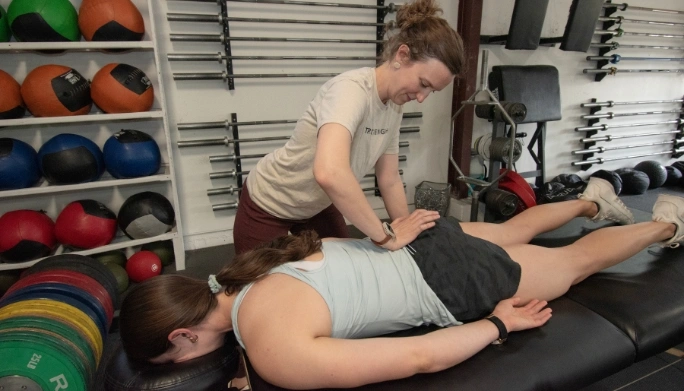
Diastasis recti is the widening and thinning of the connective tissue, called the linea alba, that runs down the center of your abdomen and joins the left and right sides of your rectus abdominis. When that tissue stretches, the two muscle bellies move apart, and the core loses some of its ability to transfer load. It is a normal response to the demands of pregnancy, and it can also show up in others who repeatedly strain the abdominal wall.
The key point is that this is about function, not just a gap you can measure. A core that manages pressure and load well can be strong and capable even as the tissue continues to recover. That is what we train toward.
What Are the Signs of Diastasis Recti?
The most common signs are a doming or ridge along the midline when you sit up, a soft belly pooch that lingers after birth, and a sense that your core feels weak or disconnected. Some women also notice low back pain, poor posture, or pressure in the pelvic floor. These signs reflect how your core is managing load, which is exactly what we can improve.
How Do You Check for Diastasis Recti?
You can check for diastasis recti at home with a simple finger test along your midline. It gives you a rough sense of the separation, though a full assessment looks at function too. Here is how to do it.
- Lie on your back with your knees bent and feet flat on the floor.
- Place your fingers along your midline, just above and below your belly button.
- Gently lift your head and shoulders off the floor, like the start of a small curl.
- Feel for a gap between the muscles, and notice how many fingers fit and how deep it feels.
- Check above the navel, at the navel, and below it, since the gap can vary.
Note both the width and whether the midline feels firm or soft when you engage. A separation of two finger widths or more is often considered a diastasis, but the quality of that tension matters just as much as the number.
Is It Diastasis Recti or Just a Postpartum Belly?
A lingering soft belly after birth is normal and does not always mean diastasis recti. The difference is the separation and how your core manages pressure, which the finger test and a movement assessment help reveal. If you see a doming ridge along your midline when you sit up, that points more toward diastasis recti. Either way, gentle core rebuilding helps you feel stronger and more connected.
What Causes Diastasis Recti?
Diastasis recti is caused by sustained pressure and stretch on the abdominal wall, most often from a growing baby during pregnancy. As the belly expands, the linea alba thins to make room, which naturally widens the gap. Several things influence how much it happens and how it recovers.
- Pregnancy, especially with a larger baby, multiples, or more than one pregnancy.
- Hormonal changes that soften connective tissue.
- Repeated pressure that pushes the belly outward, like frequent breath holding while lifting.
- Returning to intense core work too soon before the deep core can manage it.
None of this means you did something wrong. It means your core needs a smart, progressive plan to rebuild its strength and coordination.
Can Diastasis Recti Cause Back Pain?
Yes, diastasis recti can contribute to low back pain because the core helps support and stabilize your spine. When the deep core cannot transfer load well, other areas like the lower back and pelvis often pick up the slack. Many women notice their back pain eases as their core control improves.
This is why we treat the core as a system rather than chasing a flat belly. Building strength and coordination through the trunk supports your back, your pelvic floor, and your daily movement.
How Do You Fix Diastasis Recti?
You fix diastasis recti by retraining the deep core to manage pressure, then progressively loading it so it gets strong and functional again. The aim is not just to close a gap but to build a core that works under real-life and athletic demands. Start with the foundations and build from there.
- Deep core breathing. Coordinate your breath with a gentle draw in of the deep abdominal muscles.
- Pelvic floor connection. Link your breath and core with a relaxed, responsive pelvic floor.
- Heel slides and marches. Add gentle limb movement while keeping your core engaged and your belly flat.
- Side planks and modified planks. Build the deep core and obliques in positions you can control.
- Progressive loading. Step up toward carries, squats, and the demands of your sport over time.
The right starting point and progression depend on your stage and how your core responds. This is where guided care helps, since a plan built for you works far better than a generic routine.
Which Exercises Should You Avoid?
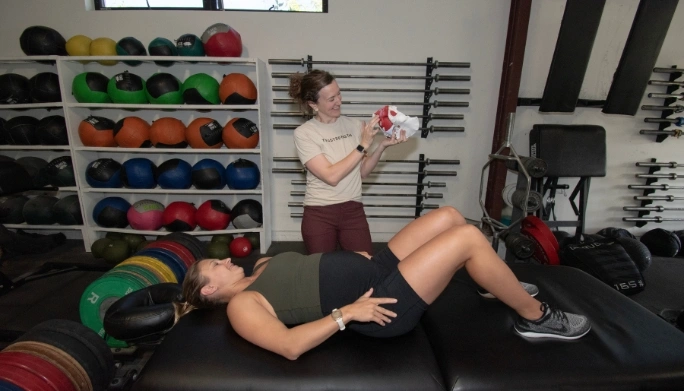
Avoid movements that make your belly dome, bulge, or bear down, at least until your core can manage them. Early on, that often means holding off on traditional crunches, full sit-ups, and heavy planks. The goal is not fear, but choosing movements that build the core rather than push it outward. As your control improves, you steadily reintroduce more demanding work.
Do Belly Binders Help Diastasis Recti?
A binder can offer short-term support and comfort in the early postpartum weeks, but it does not rebuild your core on its own. Used briefly, it may help you feel more supported during daily tasks. Lasting results still come from progressive deep core training, so think of a binder as a temporary aid rather than a fix.
How to Protect Your Core in Daily Life
Small habits throughout the day support your recovery as much as your exercises do. The goal is to manage pressure well rather than holding your breath and bearing down. These simple cues add up over time.
- Exhale and gently engage your core as you lift, stand, or carry your baby.
- Roll to your side and push up with your arms to get out of bed.
- Avoid straining on the toilet, and keep your bowels regular.
- Keep a long spine and soft brace instead of clenching or breath holding.
None of this needs to be perfect. Consistent, mindful movement is what helps your core rebuild day by day.
Does Diastasis Recti Heal on Its Own?
Many cases of diastasis recti improve in the first weeks to months after birth as the body recovers, but the core often needs targeted training to fully rebuild its strength and function. Some separation can remain even after the early healing, and that is where focused work makes the difference. Time helps, but training is what restores a strong, capable core.
| Stage | What to expect | How care helps |
|---|---|---|
| Early postpartum | Natural recovery begins, core feels weak | Gentle deep core and breathing work |
| Rebuilding phase | Strength returns with consistent training | Progressive loading toward your goals |
| Lingering separation | Gap or weakness that hangs on | A targeted plan to restore function |
If your core still feels weak or your belly domes months after birth, it does not mean you are stuck. It usually means the deep core needs focused, progressive training.
Can You Fix Diastasis Recti Without Surgery?
Yes, the large majority of diastasis recti improves with progressive exercise and never needs surgery. A focused plan that rebuilds deep core control and then loads it restores function for most women. Surgery is generally reserved for cases with significant symptoms that do not respond to a thorough rehab plan.
Can You Exercise and Run With Diastasis Recti?
Yes, and with the right plan you can stay active and return to running and lifting. The key is building deep core control first, then reintroducing impact and load in steps. We help you adjust your training so you keep moving and keep your fitness while your core rebuilds. Staying active in the right way supports your recovery rather than setting it back.
When Should You See a Physical Therapist?
See a physical therapist if your core feels weak or disconnected, your belly domes with effort, or you are unsure how to start. You do not have to wait until something feels wrong to get guidance, and earlier support usually means a smoother return to the activities you love. Pain, leaking, or pressure in the pelvic floor are also good reasons to get assessed.
At TruStrength Performance and Rehab, we take an active, evidence-based approach that keeps you training while you heal. We assess how your core and pelvic floor work together, then build a personalized plan that rebuilds real strength, not just a flatter belly.

Rebuild a Core You Can Trust
Diastasis recti is common, and it responds well to a smart, progressive plan. We help active women across the Denver area rebuild strong, capable cores and get back to the training and life they love. No fear-based rules, no one-size-fits-all routines, just personalized care that meets you where you are.
What We Offer
We provide one-on-one, evidence-based physical therapy for active adults and women rebuilding after pregnancy. Every plan is built around your body, your goals, and the way you want to move and live.
Request an Appointment
If your core feels weak or your belly domes, let us help you rebuild with confidence. Call us at (720) 983-3665 or request an appointment to talk through your goals and the best path forward. Move better, feel stronger, and get back to what you love.
Frequently Asked Questions
How do I know if I have diastasis recti?
You can check at home by lying on your back, placing your fingers along your midline, and gently lifting your head to feel for a gap between the abdominal muscles. A separation of two finger widths or more often suggests diastasis recti, though the firmness of the midline matters too. A full assessment looks at how your core manages pressure and load.
Does diastasis recti go away on its own?
Many cases improve in the first months after birth, but the core often needs targeted training to fully rebuild. Some separation can remain even after the early recovery. Progressive deep core work is what restores lasting strength and function.
What exercises should I avoid with diastasis recti?
Early on, avoid movements that make your belly dome or bulge, including traditional crunches, full sit-ups, and heavy planks. These can push the core outward before it is ready. As your control improves, you steadily reintroduce more demanding work.
Can diastasis recti be fixed without surgery?
Yes, most diastasis recti improve with progressive exercise and never need surgery. A plan that rebuilds deep core control and then loads it restores function for the large majority of women. Surgery is reserved for significant cases that do not respond to rehab.
Can I run or lift with diastasis recti?
Yes, with the right plan, you can return to running and lifting. The key is building deep core control first, then reintroducing impact and load in steps. Staying active in the right way supports your recovery.
How long does it take to recover from diastasis recti?
Timelines vary, but many women see meaningful improvement over several weeks to a few months of consistent training. The pace depends on your starting point, your consistency, and your goals. A guided, progressive plan usually gives the most reliable results.