

Exercise after C section usually starts with gentle walking, breathing, and pelvic floor work in the first days and weeks, then builds toward core and strength training once your provider clears you, often around six to eight weeks. Running, jumping, and heavy lifting typically come later, closer to three to six months, once your core and pelvic floor can handle the load.
A cesarean birth is major abdominal surgery and a birth at the same time. Your body needs a plan that respects both, and that plan should move you forward rather than keep you on the couch.
Here is what you can do today, no matter where you are in recovery.
- Take a short, easy walk and add a few minutes each day as you feel ready.
- Practice belly breathing for three to five minutes, letting your ribs and belly expand as you inhale.
- Gently lift and release your pelvic floor ten times, making sure to fully relax after each lift.
- Support your incision with a pillow or your hands when you cough, sneeze, or laugh.
- Write down any leaking, heaviness, or pain so you can share it with your provider or physical therapist.
Below, we cover what to do week by week, which exercises help most, the warning signs to watch for, and how to return to the workouts you love.
When Can You Start Exercising After a C Section?
Most people can start gentle movement within days of a C section, with walking and breathing leading the way. Structured exercise usually begins after your postpartum visit, once your provider confirms your incision is healing well.
You are in good company. According to the CDC, 32.4 percent of all U.S. deliveries in 2024 were by cesarean, yet many new parents leave the hospital with very little guidance on exercise.
Why Gentle Movement Matters Early
Walking improves circulation, eases stiffness, and helps with gas and constipation after surgery. It also lifts your mood during a demanding season.
Early movement is not a workout. It is how you remind your body that it is safe to move again.
What Your Provider Clearance Really Means
The postpartum visit checks your incision, bleeding, and overall health. It does not always include a detailed look at your core or pelvic floor.
Clearance means you can begin building up, not that you are ready for everything at once. A graded plan fills that gap.
What Does a Week by Week Exercise Plan Look Like?
Recovery after a cesarean follows a general pattern, although every body heals on its own timeline. Use this table as a starting guide, not a strict schedule.
| Time After Birth | Main Focus | Example Activities | Hold Off On |
|---|---|---|---|
| Days 1 to 14 | Circulation and breathing | Short walks, belly breathing, ankle pumps, gentle pelvic floor lifts | Lifting anything heavier than your baby |
| Weeks 2 to 6 | Reconnecting the core | Longer walks, heel slides, pelvic tilts, supported bridges | Crunches, planks, running |
| Weeks 6 to 12 | Building strength | Squats, bridges, rows, side lying leg work, low impact cardio | High impact work and heavy lifting |
| Months 3 to 6 | Returning to impact and load | Progressive lifting, light jogging, jumping drills when ready | Rushing past symptoms |
Days 1 to 14
Focus on walking, breathing, and simple circulation exercises like ankle pumps. Log rolling onto your side to get out of bed protects your incision.
Keep walks short and frequent. If bleeding increases or pain spikes, scale back the next day.
Weeks 2 to 6
Now you can gently reconnect with your deep core. Heel slides, pelvic tilts, and supported glute bridges wake up muscles that went quiet during pregnancy and surgery.
Your walks can grow longer as well. Many people feel ready for 20 to 30 minutes by the end of this window.
Weeks 6 to 12
After clearance, you begin to add strength. Bodyweight squats, bridges, band rows, and low impact cardio like cycling or swimming, once bleeding has stopped, are good choices.
This is also the right time for a pelvic floor and core assessment. It shows you exactly where to focus before adding impact.
Months 3 to 6
Running, jumping, and heavier lifting can return gradually if you are symptom free. Many clinicians use around 12 weeks as a general starting point for return to running after birth.
Passing a few basic tests first, like hopping and single leg balance without leaking or heaviness, helps you return with confidence.
What Are the Best Exercises After a C Section?
The best exercises after a C section retrain breathing, the deep core, the pelvic floor, and the glutes before you add load. These muscles work as a team to manage pressure in your trunk.
Diaphragmatic Breathing

Lie on your back with knees bent and one hand on your belly. Breathe in so your ribs and belly widen, then exhale slowly as your belly gently draws in.
This simple drill coordinates your diaphragm, abdominals, and pelvic floor. It forms the foundation for every other exercise.
Pelvic Floor Lifts and Releases
As you exhale, gently lift your pelvic floor as if stopping gas. As you inhale, let it fully relax.
The release matters as much as the lift. A pelvic floor that never lets go can cause its own problems.
Heel Slides and Pelvic Tilts
Heel slides involve sliding one heel away along the floor while keeping your core gently engaged. Pelvic tilts involve gently flattening your low back into the floor, then releasing.
Both teach your deep abdominals to work without straining the incision.
Glute Bridges
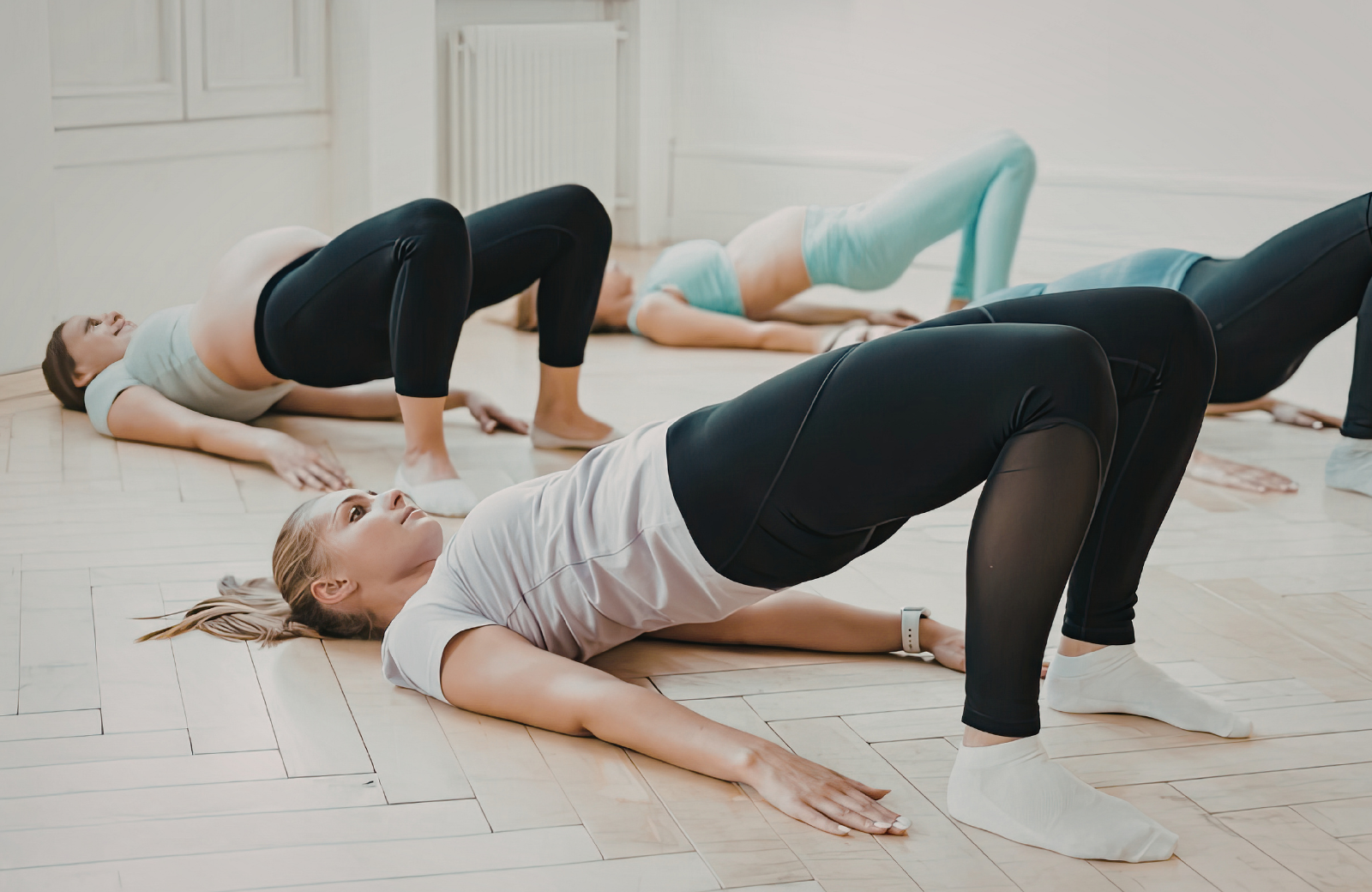
Lie on your back, exhale, and lift your hips while squeezing your glutes. Lower slowly and repeat 10 to 12 times.
Strong glutes support your pelvis and back during all that lifting, carrying, and rocking.
Side Lying Clamshells and Leg Lifts
These target the outer hip muscles that stabilize your pelvis when you walk and climb stairs. They are gentle on the incision and easy to do during nap time.
Supported Squats and Sit to Stand
Practice standing up from a chair without using your hands. This builds leg strength for every time you lift your baby from the floor or crib.
Which Exercises Should You Avoid After a C Section?

Early on, avoid exercises that create a lot of pressure in your abdomen or pull hard on healing tissue. Most of these come back later with a good progression.
- Crunches, sit ups, and full planks in the first weeks.
- Heavy lifting beyond your baby and light household items before clearance.
- Running and jumping before your core and pelvic floor are ready.
- Breath holding and straining during any movement.
- Swimming until your incision is healed and bleeding has stopped.
Why Crunches Wait
Crunches push pressure outward against the abdominal wall. With a healing incision and possible separation of the abdominal muscles, that pressure is better introduced gradually.
You can build strong abs again. The order in which you build them makes all the difference.
How Do You Protect Your Incision and Scar?
Protecting your incision starts with how you move through the day. Small habits reduce strain while tissue heals.
- Roll to your side before sitting up in bed.
- Exhale as you lift, stand, or move from the floor.
- Hold a pillow over your incision when you cough or laugh.
- Keep your baby close to your body when you carry them.
Scar Mobility After Healing
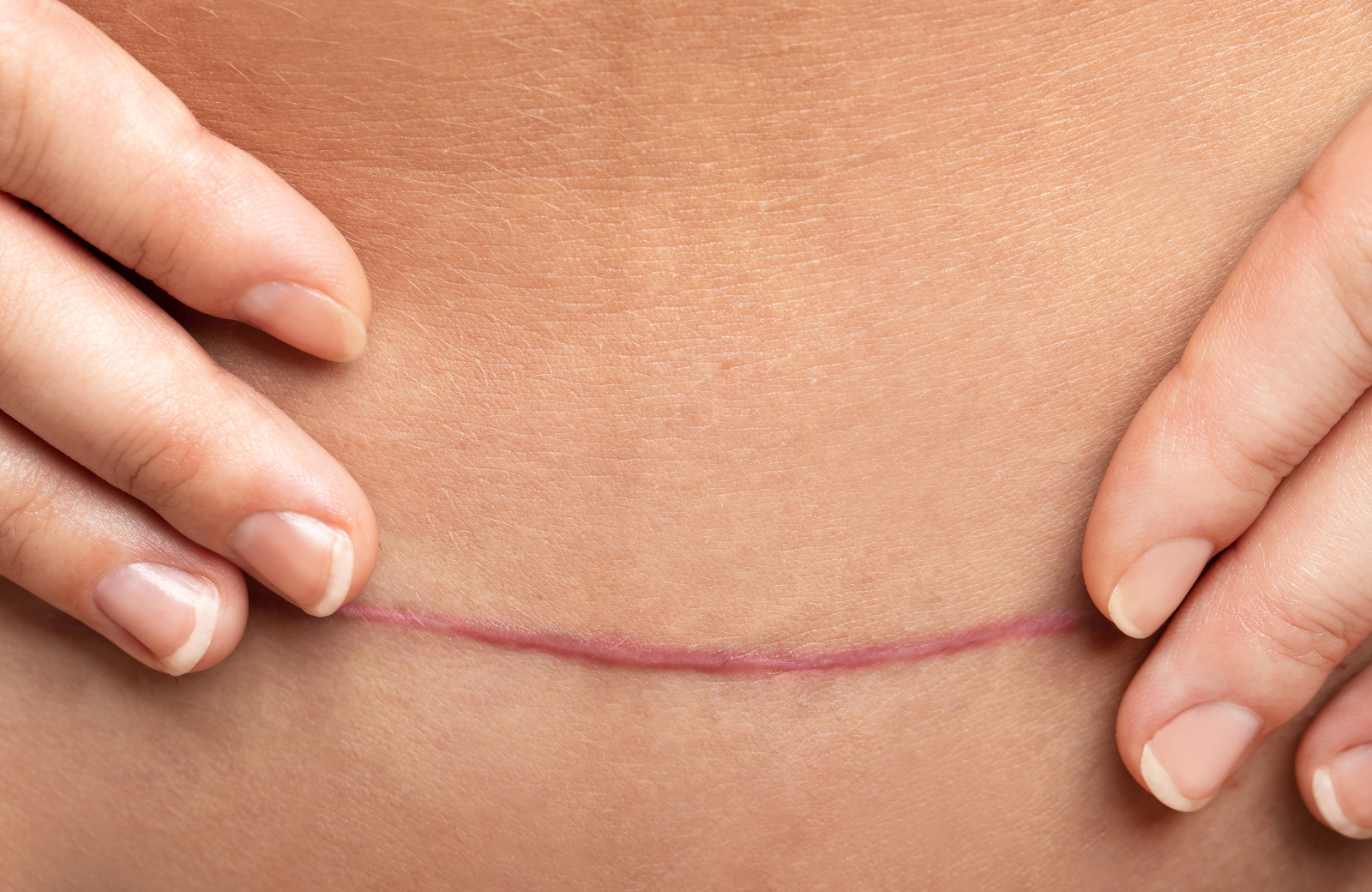
Once the incision is fully closed and your provider approves, gentle scar massage may help with tightness, numbness, or pulling sensations. A pelvic health physical therapist can show you how to do it safely.
Scar restrictions can affect how your core and pelvic floor move. Addressing them often makes other exercises feel better.
What Warning Signs Mean You Should Slow Down?
Some symptoms suggest your body needs more time or a different approach. Pain is information, and these signs deserve attention.
- Increased bleeding or bleeding that turns bright red again after exercise.
- Redness, warmth, swelling, or drainage around the incision.
- Fever or feeling generally unwell.
- Leaking urine or stool with coughing, lifting, or exercise.
- A feeling of heaviness, pressure, or bulging in the vagina.
- Doming or coning along the middle of your belly during effort.
- Pain in your back, hips, or pelvis that keeps building.
Contact your provider right away for signs of infection or heavy bleeding. For leaking, heaviness, or core concerns, a pelvic floor physical therapist can help.
Does a C Section Affect Your Pelvic Floor?
Yes, it can. Pregnancy itself places months of load on the pelvic floor, whether or not you give birth vaginally.
Many people are surprised to experience leaking, pelvic pain, or pain with intercourse after a cesarean. These symptoms are common, but they are not something you have to accept.
The Core and Pelvic Floor Connection
Your pelvic floor, deep abdominals, diaphragm, and back muscles work together as a pressure system. When one part is weakened or tense, the others change how they work.
That is why our pelvic floor therapy looks at breathing, posture, and strength together.
How Do You Return to Running and Lifting After a C Section?
Return to running and lifting in stages, and let symptoms guide the pace. Strong evidence supports staying active after birth.
The American College of Obstetricians and Gynecologists reports that the evidence suggests aerobic and strength conditioning exercises should be encouraged before, during, and after pregnancy. The same guidance notes that athletes who want to resume high intensity training should do so under close supervision.
Readiness Checks Before Running
- Walk briskly for 30 minutes without symptoms.
- Balance on one leg for 10 seconds on each side.
- Do 10 single leg squats on each side with good control.
- Jog in place for one minute without leaking or heaviness.
- Hop on each leg 10 times without symptoms.
Returning to the Barbell
Lifters often ask when they can squat and deadlift again. Start with lighter loads and focus on exhaling through the effort instead of holding your breath.
Increase weight gradually over weeks, watching for leaking, heaviness, or doming. Most people can return to meaningful strength training with the right progression.
How Do You Fit Exercise Into Life With a Newborn?
Short, frequent sessions work better than long workouts you never get to. Five to ten minutes of focused work during a nap counts.
Stack Exercise Onto Daily Tasks
- Do belly breathing and pelvic floor lifts while feeding your baby.
- Practice sit to stand every time you get up from the couch.
- Take the stroller for a walk instead of waiting for a free hour.
- Do a set of bridges on the floor during tummy time.
Respect Sleep and Recovery
Sleep loss affects healing, mood, and energy. On rough nights, a gentle walk or breathing session is a win, and a hard workout can wait.
Fueling matters too. Eating enough protein and staying hydrated support tissue repair, especially if you are breastfeeding.
Give Yourself Credit
Progress after a cesarean is rarely a straight line. Some weeks move fast and others feel stuck, and both are normal parts of recovery.
Frequently Asked Questions
Can I Exercise Two Weeks After a C Section?
Yes, gentle exercise like walking, breathing drills, and pelvic floor lifts is usually fine at two weeks. Structured workouts and anything strenuous should wait until your provider clears you. Listen for increased pain or bleeding as a sign to scale back.
How Soon Can I Do Ab Exercises After a C Section?
Gentle deep core work like heel slides and pelvic tilts can start in the first few weeks. Crunches, sit ups, and planks usually wait until after clearance and a solid foundation of breathing and core control. A physical therapist can check your abdominal wall first.
When Can I Run After a C Section?
Many clinicians suggest around 12 weeks as a general starting point, provided you pass basic readiness tests without symptoms. Some people need longer, especially if they have leaking, heaviness, or abdominal separation. A graded walk to run plan works best.
Is It Normal to Feel Numbness Around My Scar?
Yes, numbness around a cesarean scar is common because small nerves are cut during surgery. Sensation often improves over months, though some numbness can last longer. Gentle scar mobility work after healing may help with pulling or tightness.
Can Exercise Help My Belly Look Flatter After a C Section?
Exercise strengthens the muscles that support your belly, which can improve how it looks and feels. The overhang some people notice above a scar often relates to scar tissue and skin changes too. Focus on function first, and appearance often follows.
Do I Need a Pelvic Floor Assessment After a C Section?
It is a smart step for anyone returning to exercise, and especially helpful if you notice leaking, pressure, or pain. An assessment shows whether your pelvic floor needs strength, relaxation, or coordination work. That makes every workout more effective.
How We Support Your Recovery After a Cesarean
At TruStrength Performance and Rehab, we help new parents rebuild strength with a plan that respects healing and honors their goals. Recovery is not about bouncing back. It is about building forward.
Pelvic Health Care From Specialists
Our women’s health physical therapy team assesses your core, pelvic floor, scar, and movement patterns. From there, we build a program that fits your body and your life with a new baby.
A Plan That Grows With You
Whether you want to walk comfortably, lift your toddler without leaking, or run your next race, we map the steps to get there. Your goals shape the plan, not a generic timeline.
We keep you moving throughout, adjusting load and intensity as your body adapts.
Take the Next Step
If you are ready to feel strong and confident in your body again, we are here to help in Denver and Centennial. Call us at (720) 983-3665 or request an appointment to talk through your goals.