


Hand strengthening exercises improve grip strength, finger control, and overall hand function by training the muscles, tendons, and joints responsible for daily movements. Common exercises include grip squeezes, finger extensions, wrist curls, towel twists, and therapy putty exercises.
At TruStrength Performance and Rehab in Denver, we help patients regain strength and function in their hands using targeted therapy programs customized to their needs. Whether you’re recovering from injury, managing arthritis, or simply trying to boost performance, strengthening your hands is a smart investment in your health and independence.
Key Takeaways
- Hand strengthening exercises improve grip strength, coordination, and daily function.
- Weak hands can result from injury, overuse, aging, arthritis, or nerve-related conditions.
- Grip squeezes, finger extensions, wrist curls, and therapy putty exercises can help build hand strength.
- Consistent training can improve performance in sports, work, and everyday activities.
- A physical therapist can create a personalized strengthening plan for pain, weakness, or recovery.
Let’s explore why hand strength matters, what causes weakness, and which exercises actually work.
Why Hand Strength Matters More Than You Think
The human hand is made up of 27 bones, 34 muscles, and countless tendons, ligaments, and nerves—all working together to help you perform everyday tasks like writing, lifting, cooking, or gripping your steering wheel. When one part of this system is weak or injured, it can throw off your whole upper extremity.
Grip strength is also a strong predictor of overall health and function, especially as we age. In fact, research has linked low grip strength with higher fall risk, functional decline, and even cardiovascular issues [source].
The benefits of improving your hand strength include:
-
Better performance in sports and weightlifting
-
Reduced risk of injuries like tendonitis or carpal tunnel syndrome
-
Improved fine motor control and dexterity
-
Greater ease performing daily tasks like cooking, dressing, and lifting
Whether you’re recovering from surgery or want to future-proof your mobility, building strong hands is a critical part of the equation.
Common Causes of Hand Weakness
Hand strength can decline for a number of reasons. Understanding the root cause can help guide the right treatment and exercise plan.
1. Repetitive Strain or Overuse
Typing, gripping tools, or doing high-volume weightlifting without proper recovery can lead to muscle fatigue or tendon irritation in the hands and forearms. This is often seen in athletes, office workers, and manual laborers.
2. Injury or Surgery
Fractures, sprains, or post-surgical immobilization (e.g., after wrist surgery or casting) often result in significant muscle atrophy and joint stiffness, making strength training essential during recovery.
3. Arthritis
Osteoarthritis or rheumatoid arthritis can weaken the muscles around the hand joints due to pain, inflammation, or disuse. Strengthening helps support the joints and reduce discomfort.
4. Neurological Issues
Nerve injuries or conditions like carpal tunnel syndrome, cervical radiculopathy, or stroke can affect muscle activation and fine motor control.
5. Aging
As we age, we naturally lose muscle mass and coordination. Without regular training, grip strength declines, impacting independence in later years.
If you’re not sure what’s causing your hand weakness, a physical therapy assessment can help identify whether the issue is muscular, neurological, or structural.
The Best Hand Strengthening Exercises (And When to Use Them)
Before starting any exercise program, it’s important to warm up your hands and fingers with gentle movement. You can soak your hands in warm water or do a few minutes of light range of motion work—like wrist circles or finger stretches—to improve circulation.
Here’s a progression of the most effective hand strengthening exercises used at TruStrength Performance and Rehab, tailored to different goals and ability levels:
1. Grip Squeeze
Use a soft ball or therapy putty to strengthen the muscles in your palm and fingers. Squeeze gently and hold for 3–5 seconds before releasing. This targets overall grip and is ideal for beginners or post-injury recovery.
2. Finger Pinches
Pinch a clothespin, paper clip, or coin between your thumb and each finger individually. This exercise builds thumb stability and fine motor control—especially helpful for writing, buttoning, or holding small objects.
3. Rubber Band Finger Extensions
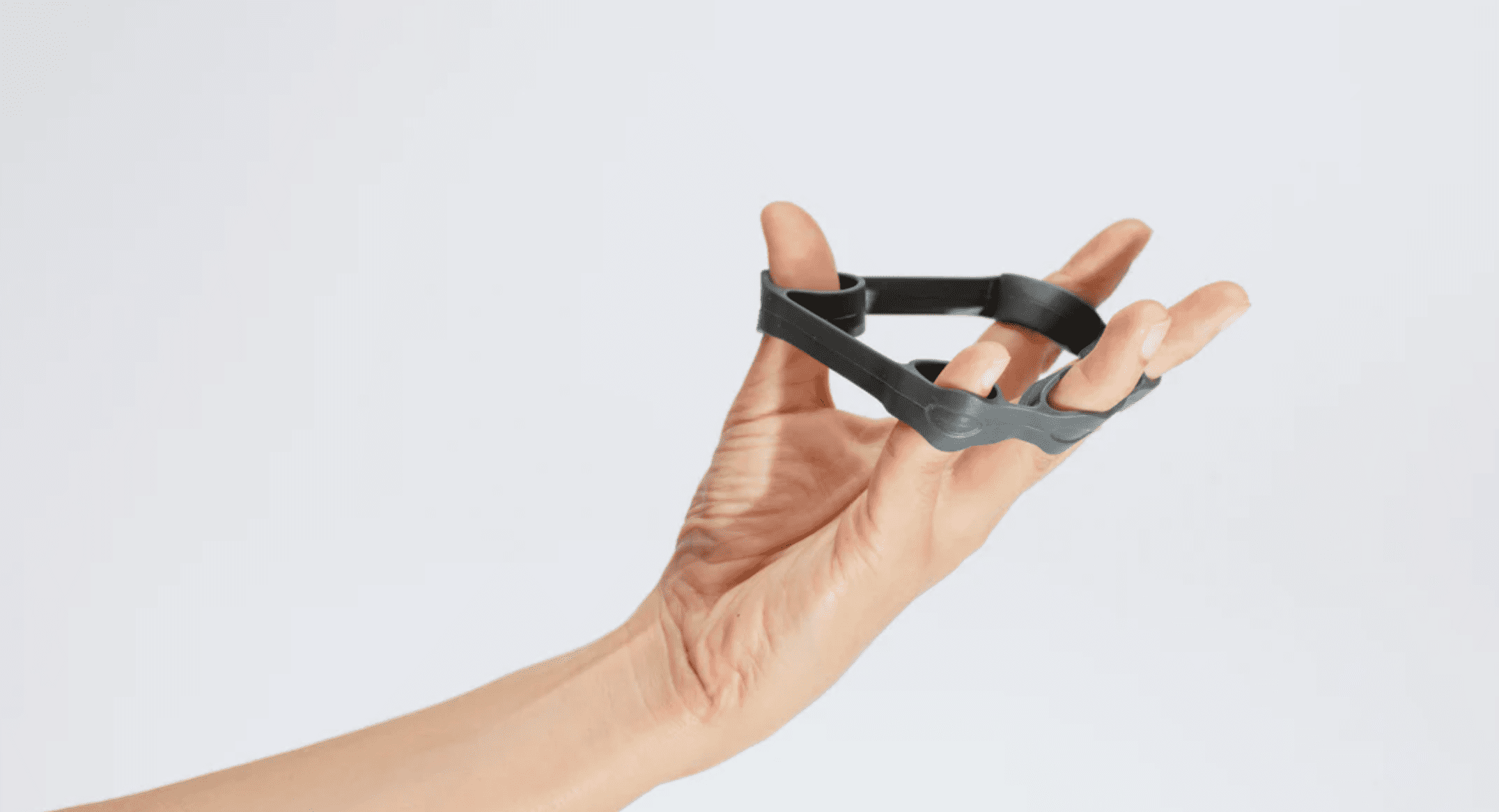
Place a rubber band around your fingers and slowly open your hand against the resistance. This strengthens the finger extensors and balances out gripping muscles that tend to dominate.
4. Wrist Curls
Using a light dumbbell or resistance band, rest your forearm on a table with your palm facing up. Curl your wrist upward, hold for a second, then slowly lower. Flip the palm down for wrist extension. These help build strength at the base of your hand and support daily lifting tasks.
5. Rice Bucket Work
Digging, twisting, and gripping through a bucket of dry rice challenges every small muscle in the hand and forearm. This technique is used by athletes and therapists to build real-world, multi-directional strength.
6. Towel Twists
Hold a rolled towel and twist it as if wringing out water. This engages multiple muscle groups and builds endurance. Perfect for those recovering from tennis elbow or golfers’ elbow.
7. Ball Walks
Place your hand on top of a tennis ball or therapy ball and walk your fingers across its surface. This improves coordination, finger independence, and joint mobility.
If you’re dealing with pain, stiffness, or swelling, we often modify or adapt these exercises based on your current tolerance and goals. Our physical therapists at TruStrength ensure each plan is progressive, safe, and tailored to your recovery phase.
How to Incorporate Hand Strengthening Into Your Routine
Most patients benefit from 10–15 minutes of hand-focused exercises 3–5 times per week. Consistency matters more than intensity. You can:
-
Add exercises during breaks at work
-
Perform them between sets at the gym
-
Use tools like therapy putty or grip rings while watching TV
-
Track your progress with grip strength measurements over time
At TruStrength, we often combine hand strengthening with shoulder, elbow, and posture work to address the entire kinetic chain. Why? Because poor shoulder positioning or nerve impingement can limit true strength gains at the hand level.
Who Benefits Most from Hand Strengthening?
While these exercises are for everyone, they’re especially important if you:
-
Have a history of wrist, hand, or elbow injury
-
Work a job with repetitive hand use (e.g., typing, construction, hairstyling)
-
Play sports like golf, tennis, climbing, or baseball
-
Are recovering from hand or wrist surgery
-
Struggle with arthritis or stiffness in the fingers
-
Are aging and want to preserve your independence
If you’re unsure how to get started or whether you’re doing the right movements, a physical therapy evaluation can identify specific deficits and guide your plan.
The TruStrength Difference: Expert Rehab in Denver
At TruStrength Performance and Rehab, our team goes beyond generic hand therapy. We specialize in:
-
Personalized hand strength programs
-
One-on-one sessions with licensed physical therapists
-
Integration of grip training into full-body function
-
Manual therapy and soft tissue work to improve mobility and reduce pain
-
Education on injury prevention and ergonomic techniques
We serve active adults, athletes, professionals, and anyone looking to feel stronger, move better, and stay pain-free. Whether you’re recovering from injury or optimizing performance, we build your plan around results that last.
Start Strengthening Your Hands Today
Don’t wait for weakness, pain, or injury to limit your life. If your hands feel less reliable—or if you’re struggling with simple tasks—it’s time to take action. With a guided program from TruStrength Performance and Rehab, you can:
-
Rebuild strength in your fingers, wrists, and forearms
-
Improve grip, dexterity, and endurance
-
Reduce the risk of future hand or wrist injuries
Ready to See What Strong Hands Can Do?
Schedule your consultation at our Denver clinic today. Let our team help you design a personalized hand strengthening program that fits your goals, lifestyle, and needs. Strength starts here. Contact us today to schedule your appointment and reclaim your strength, function, and confidence.
FAQs About Hand Strengthening Exercises
What are the best hand strengthening exercises?
The best hand strengthening exercises include grip squeezes, finger extensions, wrist curls, towel twists, therapy putty exercises, and pinch exercises. The right exercises depend on your strength, goals, and any existing injuries.
How often should I do hand strengthening exercises?
Most people benefit from hand strengthening exercises 3 to 5 times per week for 10 to 15 minutes. Progress should be gradual to avoid irritation or overuse.
Can hand exercises improve grip strength?
Yes. Consistent hand exercises can improve grip strength by strengthening the muscles in the fingers, hands, wrists, and forearms.
Are hand strengthening exercises good for arthritis?
Hand strengthening exercises can help improve function and support joint health for people with arthritis. Exercises should be adjusted based on pain levels and mobility.
When should I see a physical therapist for hand weakness?
You should consider physical therapy if hand weakness affects daily activities, follows an injury, causes pain, or does not improve with basic exercises.