



High ankle sprain recovery time usually runs 6 to 8 weeks for most active people. A mild sprain can settle in 2 to 4 weeks, while a severe tear can take 3 months or longer. Your exact number depends on the grade of the injury, how soon you start smart rehab, and your sport.
That range feels wide, and we know it is frustrating when you just want a date on the calendar. The good news is that you have more control over the timeline than you think. Staying active the right way is part of the plan.
Here is what you can do today:
- Protect the ankle from twisting, especially turning your foot outward on stairs and uneven ground.
- Use ice, compression, and elevation for the first few days to calm swelling.
- Keep moving everything you can, from your hips and core to your other leg.
- Notice where it hurts, since pain above the ankle bone is an important clue.
- Book an evaluation if you cannot walk on your toes or bear weight without sharp pain.
What Is a High Ankle Sprain and How Is It Different?
A high ankle sprain injures the ligaments that join your two lower leg bones just above the ankle. Those bones are the tibia and fibula. Clinicians call this group of ligaments the syndesmosis, so you may hear the term syndesmotic injury.
A common ankle sprain, the kind most people picture, happens lower down when the foot rolls inward. A high ankle sprain happens when the foot turns outward while the ankle bends up. That motion pries the two leg bones apart.
Why the Location Changes Everything
Every step you take wedges the talus bone up into the space between the tibia and fibula. When those ligaments are hurt, walking, cutting, and jumping keep stressing the exact tissue that needs to heal.
That is why a high ankle sprain often feels fine at rest but lingers when you push off. It is also why rushing back tends to cost more time than it saves.
Who Tends to Get Them
High ankle sprains show up most in sports with planted feet, contact, and quick changes of direction. According to Cleveland Clinic, they often happen in football, basketball, wrestling, ice hockey, skiing, and soccer.
Here in Colorado, we also see them in trail runners, skiers, and lifters. A caught root, a twisting fall, or a bad box jump landing can all do it. The sport changes, but the twisting mechanism stays the same.
How Long Does a High Ankle Sprain Take to Heal?
Most high ankle sprains take 6 to 8 weeks to heal enough for normal activity. Athletes often need longer before a full return to sport. Cleveland Clinic notes that recovery may take six to eight weeks or longer. Return to play can take even more time.
The American Orthopaedic Foot and Ankle Society puts it plainly: recovery for a high sprain is often twice as long as recovery for a common low sprain. Their surgeons add that a mild injury may only need two to four weeks. A complete tear, on the other hand, can require surgery.
Recovery Time by Grade
Clinicians grade sprains by how much the ligaments are stretched or torn. Use this table as a general guide, not a promise, since every ankle and every athlete heals a little differently.
| Grade | What It Means | Typical Signs | Typical Recovery Window |
|---|---|---|---|
| Grade 1 (mild) | Ligaments stretched, no meaningful tear | Mild swelling, sore when pushing off, ankle feels stable | About 2 to 4 weeks |
| Grade 2 (moderate) | Partial tear of one or more ligaments | Swelling, pain with walking, trouble with toe raises | About 6 to 8 weeks, sometimes longer |
| Grade 3 (severe) | Complete tear, possible widening between the bones | Severe pain, unable to bear weight, ankle feels unstable | Often 3 months or more, and surgery may be needed |
What Affects Your High Ankle Sprain Recovery Time?
Grade matters most, but it is not the only factor. These details can shorten or stretch your timeline:
- How soon you start guided rehab once the swelling settles
- Whether you also injured the low ankle ligaments at the same time
- Your sport, since cutting and jumping demand more than cycling or rowing
- Your sleep, nutrition, and overall training load
- Past sprains on the same ankle
How Do You Know if It Is a High Ankle Sprain?
The biggest clue is pain above the ankle bone, on the front of the lower leg. A common sprain hurts more on the outside of the ankle instead. Pain that spikes when you turn your foot outward or push off your toes also points to a high sprain.
Common Signs and Symptoms
- Pain and tenderness just above the ankle joint
- Swelling that is often milder than you expect for how much it hurts
- Difficulty walking on your toes or climbing stairs
- Pain when the foot turns outward
- Bruising that may appear a few days after the injury
How We Check It in the Clinic
A thorough hands on exam tells us a lot. One example is the squeeze test. Pressing the two leg bones together higher on the shin brings on pain down at the ankle.
We also use the external rotation test, where gently turning the foot outward brings on symptoms. If the exam suggests a severe injury, imaging helps. Diagnostic ultrasound or an MRI can confirm whether the bones have separated.
Can You Walk on a High Ankle Sprain?
Many people can walk on a mild high ankle sprain, though it often hurts to push off and climb stairs. A moderate or severe sprain may need a walking boot or crutches for a short stretch.
Walking itself is not the enemy. The goal is to walk without twisting the foot outward or limping through sharp pain. A limp changes how your hip and knee load, which can create new problems.
Signs You Need More Protection
- You cannot take four steps without significant pain
- The ankle feels loose or gives way
- Pain gets worse each day instead of better
- You notice numbness, tingling, or pain directly over the bones
If any of these show up, get evaluated promptly. A fracture or a fully unstable syndesmosis needs a different plan.
What Is the Fastest Way to Heal a High Ankle Sprain?
The fastest way to heal a high ankle sprain is to protect it early, then load it progressively. Resting it completely for weeks feels safe, but it backfires. Your calf, ankle stabilizers, and balance all lose ground.
Our approach keeps you training while you heal. You hold on to your fitness with work that respects the injury. Meanwhile, the ankle earns a little more challenge each week.
The Phases of Recovery

Most high ankle sprains move through four broad phases. This timeline shows how a typical moderate sprain progresses.
| Phase | Typical Timing | Main Goals | Example Work |
|---|---|---|---|
| Protect | Days 1 to 7 | Calm swelling and avoid twisting | Ice, compression, elevation, a boot if needed, upper body and core training |
| Restore | Weeks 1 to 3 | Regain motion and normal walking | Gentle ankle range of motion, seated calf raises, stationary bike as tolerated |
| Strengthen | Weeks 3 to 6 | Build calf, hip, and foot strength | Standing calf raises, single leg balance, banded ankle work, step downs |
| Return | Week 6 and beyond | Prepare for running, cutting, and jumping | Hopping drills, straight line running, then lateral and rotational drills |
These windows shift with the grade of your sprain. A mild sprain may move through them in half the time. A severe one may stay in each phase longer.
Exercises That Help
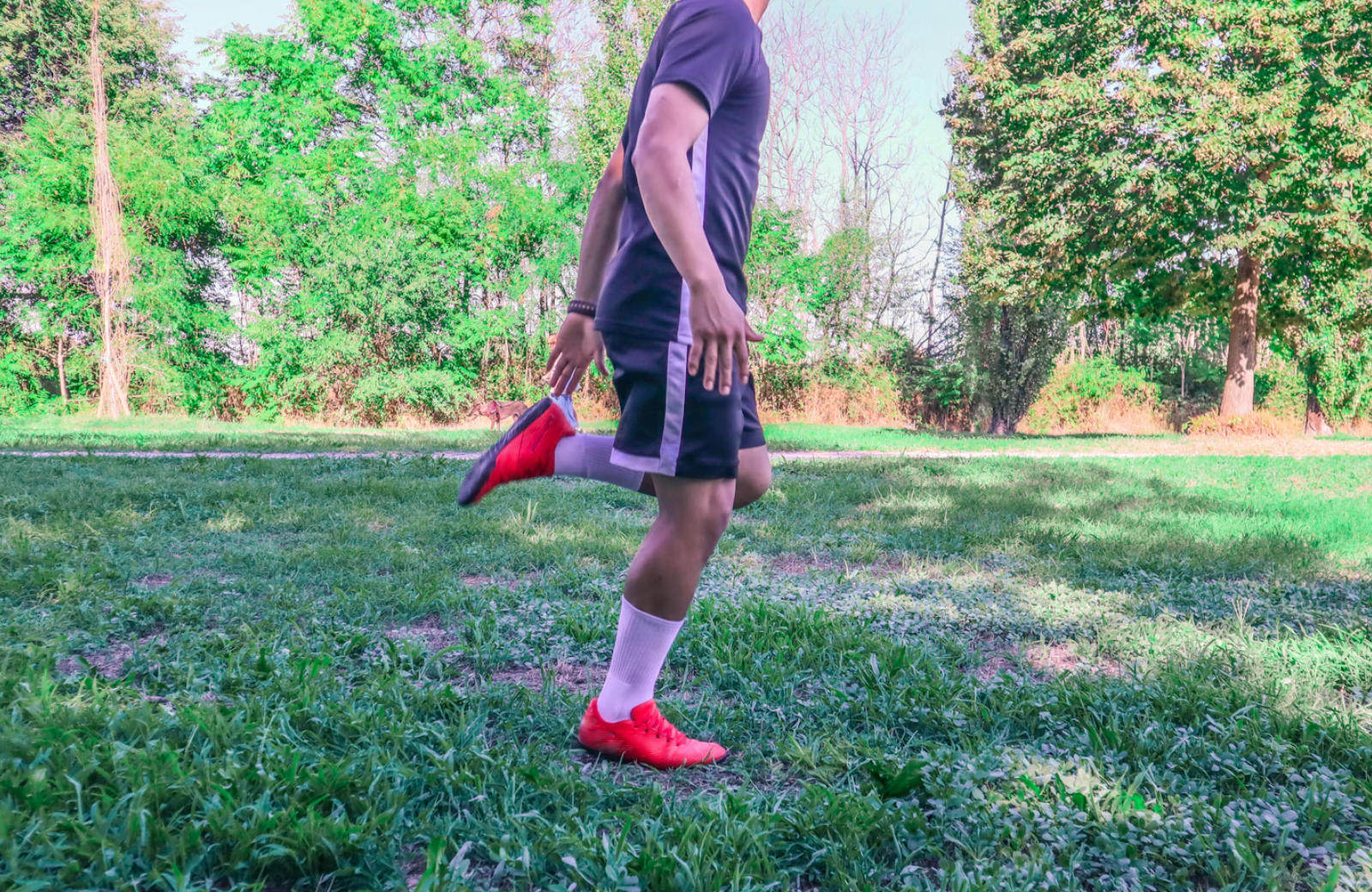
The right exercises depend on your phase, so treat this list as examples rather than a full plan. Stop any movement that causes sharp pain or leaves you limping afterward.
- Ankle alphabet: trace letters with your toes to restore motion without load.
- Seated and standing calf raises: rebuild the calf, which absorbs force every time you land.
- Single leg balance: start on a flat floor, then progress to a pillow or foam pad.
- Banded ankle movements: work the foot in and out against light resistance, keeping outward turning gentle at first.
- Hip and glute strengthening: side planks and bridges help you control the whole leg.
Treatments That Support Healing
Beyond exercise, hands on care can make the process more comfortable. Depending on your exam, we may use manual therapy, dry needling for tight calves, and taping or bracing.
We also use blood flow restriction training when heavy loading is not safe yet. It helps you build strength with lighter weights, which is a big advantage while the ligaments are still healing.
When Can You Run or Return to Sport After a High Ankle Sprain?

Most athletes return to running first and full sport later. Both steps should rest on testing, not the calendar alone. As a simple rule, walk, hop, and balance on the injured side without pain before you jog.
Return to Running Checklist
- Walking without a limp or pain
- At least 20 single leg calf raises on the injured side
- Single leg balance for 30 seconds with good control
- Pain free hopping in place on the injured leg
- Little to no swelling the morning after activity
Return to Sport Checklist
- Pain free straight line running at near full speed
- Confident cutting and pivoting in both directions
- Single leg hop distance close to your uninjured side
- Sport specific drills at full intensity without symptoms
Returning when you pass these tests, rather than when a date arrives, lowers your chance of a setback. A setback can easily add weeks to your total high ankle sprain recovery time.
Do You Need Surgery for a High Ankle Sprain?
Most high ankle sprains heal without surgery. Surgery usually comes into play only when the ligaments tear completely. In that case, the tibia and fibula separate and the ankle becomes unstable.
A surgeon may then place a screw or a flexible suture device. It holds the bones together while the ligaments heal. Rehab after surgery follows similar phases, just on a longer timeline.
How Rehab Changes After Surgery
After surgery, the protect phase often lasts several weeks in a boot with limited weight bearing. Strength and balance work still matter just as much, and many athletes need four to six months before full competition.
How Can You Prevent Another High Ankle Sprain?
You cannot prevent every accident, but you can make your ankle much harder to injure. Cleveland Clinic recommends exercise that builds joint strength, flexibility, balance, and proprioception. Proprioception is your body’s sense of where it is in space.
- Keep doing balance work two or three times a week, even after you feel fine
- Train your calves and hips with real load, not just bodyweight
- Practice landing and cutting drills with good knee and foot alignment
- Consider taping or bracing during your first few weeks back
- Replace worn out cleats or shoes that no longer support you
Have you sprained the same side more than once? A full foot and ankle evaluation can uncover the weak links. Small gaps in strength or balance often explain why the same ankle keeps getting hurt.
Frequently Asked Questions
Is a high ankle sprain worse than a regular sprain?
In most cases, yes. A high ankle sprain injures the ligaments that hold your lower leg bones together. Those ligaments take stress with every step. That is why recovery often takes about twice as long as a common low ankle sprain.
How long should you be out for a high ankle sprain?
Many athletes miss about 4 to 8 weeks, depending on the grade. Mild sprains can allow a return in a few weeks, while complete tears may mean months away from sport. Testing your strength, balance, and hopping is a better guide than the date alone.
Should you wear a boot for a high ankle sprain?
A walking boot is common for moderate and severe sprains during the first week or two. It limits the outward twisting that stresses the injured ligaments. Most people move out of the boot once they can walk comfortably without it.
Can a high ankle sprain heal on its own?
Mild sprains often heal with rest and time, but the ankle may stay weaker and less stable without targeted rehab. That leftover weakness is one reason ankle sprains tend to repeat. Guided strength and balance work helps you return with a more resilient ankle.
Does a high ankle sprain hurt more than a regular sprain?
It often does, especially when you push off or turn your foot outward. Swelling is sometimes milder than with a low sprain. That can make the injury seem less serious than it really is.
Can physical therapy speed up high ankle sprain recovery?
Physical therapy cannot rush ligament healing, but it helps you avoid the delays that come from weakness, stiffness, and setbacks. A structured plan also keeps you training safely while the ankle heals.
How We Help You Get Back on Your Feet
A high ankle sprain tests your patience, but it does not have to derail your season. With the right plan, you can stay active, protect the ankle, and come back stronger.
The right support can also keep your high ankle sprain recovery time on the shorter end of the range. That happens by avoiding setbacks, not by skipping steps.
Care Built Around Your Sport
At TruStrength Performance and Rehab, we build your plan around the activity you want to return to. Our Doctors of Physical Therapy look at the whole chain, from foot to hip.
We focus on keeping you moving while you heal. That might mean upper body sessions, bike work, or modified lifts while your ankle catches up.
Progress You Can Measure
We test strength, balance, and hopping at each stage of your recovery. Clear numbers take the guesswork out of returning to play. They also show you exactly what to work on next.
Our foot and ankle pain care also looks ahead. Once you are back, we help you keep the strength and balance that protect you from the next sprain.
Ready to Talk Through Your Ankle?
Dealing with a high ankle sprain in the Denver metro area? We would love to help you map out your return. Call us at 720.983.3665 or request an appointment to talk through your goals.
We see patients in Denver and Centennial, and your comeback starts with a clear plan.