



Back pain is frustrating when you love to move, train, and compete, and that is exactly where manual therapy for back pain comes in. You want to stay active, not sit on the sidelines, and you need clear, practical ways to keep your back strong and reliable.
If you lift, run, ride, swing, or play, you expect some muscle soreness here and there. But when your back stops you from finishing a workout, cuts a run short, or makes you nervous to pick up a barbell, it is more than just soreness, and it can quickly affect your confidence, performance, and daily life.
In this blog, the focus is on what manual therapy actually is, how it works for an active spine, and why it fits so well with a training-focused lifestyle. You see how hands-on treatment, combined with smart movement and exercise, can help you move better, stay stronger, and keep doing what you love.
Understanding Manual Therapy For Back Pain
Manual therapy for back pain is hands-on care that focuses on how your joints, muscles, and nervous system work together. A trained provider uses specific techniques to help your spine move better, feel better, and handle load again.
This is not a random rubdown or a spa massage. Manual therapy targets the areas that limit your movement or trigger your pain, so your body can perform the way you expect it to.
What Is Manual Therapy, Really
Manual therapy focuses on restoring normal motion and reducing pain through skilled touch. The provider assesses how each part of your spine and nearby joints move, then uses their hands to improve that movement.
Common manual therapy techniques for back pain include:
- Joint mobilization to improve how your spinal and hip joints glide and rotate
- Soft tissue work to ease tight or overworked muscles and fascia
- Trigger point release to calm down knots that refer pain
- Myofascial release to free up sticky, restricted tissue layers
- Assisted stretching to guide you into ranges you cannot reach on your own
Each technique has a specific purpose, and your provider chooses what fits your body and your sport. The goal is always better movement, not just a quick, temporary feel-good fix.
How Manual Therapy Helps An Active Spine Perform
Your spine does far more than just hold you upright. It transfers force between your arms and legs, stabilizes your trunk, and lets you twist, bend, and extend in every sport and workout.
When one part of your back or hips stiffens up, other areas take on extra stress. That is when you may feel pinching, grabbing, or a deep ache after training.
Manual therapy helps your spine perform by:
- Improving joint motion so you can squat, hinge, and rotate without grinding or catching
- Reducing muscle guarding so your body stops bracing in all the wrong places
- Calming irritated nerves so you feel fewer zings, twinges, or burning sensations
- Restoring normal movement patterns so your lifts, strides, and swings feel smoother
You might notice simple changes, like being able to get into a better deadlift setup or rotate farther in your backswing. Those small gains often add up to less pain, more power, and better control.
Back Pain In Active Adults Versus The Everyday Population
Back pain in active adults and athletes often looks different from back pain in people who sit most of the day. You usually feel it during or after specific movements, loads, or training blocks, not just from getting out of bed.
Common reasons for back pain in active people include:
- Sudden spikes in training volume or intensity
- Technique issues with lifts or sport skills
- Muscle imbalances or asymmetries from one-sided sports
- Limited mobility in hips, thoracic spine, or ankles
- Core and trunk control that cannot quite keep up with the demands of your sport
Instead of assuming you just got older, it helps to see your pain as a signal that some piece of the system needs attention. Manual therapy fits well here because it lets a provider assess how you move and then work directly on the restrictions that hold you back.
Common Back Pain Scenarios In Active Adults And Athletes
Back pain does not always come from one dramatic moment. Often it builds slowly through repetition, load, or technique, and then shows up when you least expect it.
Understanding the most common patterns can help you recognize what your back is trying to tell you and how manual therapy may help.
Lifting, Cross Training, and Gym-Related Back Pain
Back pain in the gym often shows up during squats, deadlifts, cleans, presses, and high-rep workouts. You might feel a sharp tweak that stops your set, or a slow build of tightness that appears later that day.
Manual therapy can help you:
- Free up stiff segments in your lumbar and thoracic spine that block a good lifting position
- Reduce tension in your hip flexors, glutes, and hamstrings that pull on your pelvis
- Decrease protective muscle guarding after a small strain, so you move more naturally again
When you combine manual therapy with smart technique work and load adjustments, you can usually return to training without constant fear of another flare-up. You learn how to respect your back without babying it.
Running, Field Sports, And Endurance Back Pain
If you run, play soccer, lacrosse, or similar sports, you might notice back pain on longer efforts, during sprints, or after intense matches. Often the issue lives around how your hips, pelvis, and trunk share the workload.
Manual therapy can:
- Improve hip extension and rotation so your lower back does not fake that motion
- Address tight hip flexors, quads, and calves that change how you land and push off
- Help reset your pelvic alignment and trunk control, so your core can stabilize with less strain
This matters because lingering back pain often leads to overuse problems in your knees, hips, or even ankles. Taking care of your spine early tends to protect the rest of your body and keep you in the game.
Rotational Sports Such As Golf, Tennis, And Throwing
Rotational athletes ask a lot from their spine and hips. If your thoracic spine or hips do not rotate well, your lower back often pays the price every time you swing, serve, or throw.
Manual therapy can:
- Unlock stiff thoracic segments, so you rotate through your upper back, not just your low back
- Improve hip rotation so your pelvis can load and unload smoothly
- Ease tight lats, obliques, and hip muscles that limit coil and follow through
When those areas move better, your lumbar spine does not have to twist as much on its own. That usually feels like less strain, smoother motion, and often cleaner mechanics in your swing or throw.
What To Expect From Manual Therapy Sessions
Understanding what happens in a session helps reduce a lot of the worry or guesswork. Instead of wondering what someone will do to your back, you can walk in with clear expectations.
Sessions usually include conversation, assessment, hands-on work, and a plan for what to do between visits.
The Initial Assessment Beyond Where It Hurts
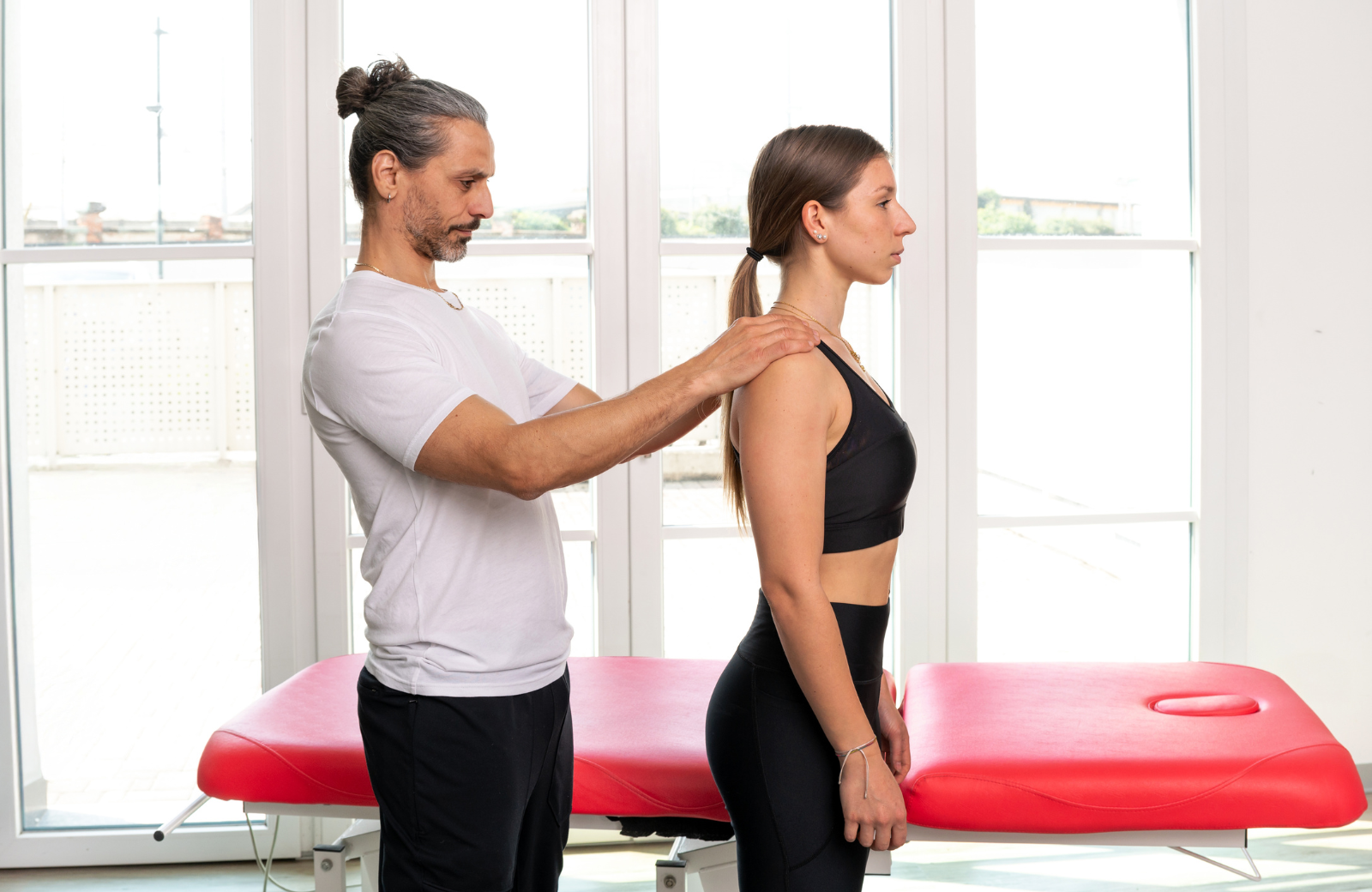
Your first session should feel like a conversation and a movement study, not just a quick poke at the painful spot. Your provider wants to know how your back pain started, what makes it worse, and what your training looks like.
A thorough assessment often includes:
- Checking posture, gait, and basic movement patterns
- Testing spinal, hip, and shoulder mobility
- Assessing core control and hip strength
- Looking at sport-specific positions like your squat stance, run form, or swing
This bigger picture helps your provider focus on the cause, not just chase symptoms. For an active person, that difference can decide whether your pain keeps coming back or finally settles down.
Techniques You Might Experience

During a session, your provider chooses techniques based on what shows up in your assessment. The goal is to target the right structures and help your body handle your sport better.
You might feel:
- Gentle joint mobilizations that feel like small, guided movements of your spine or hips
- Deeper soft tissue work on tight or overactive muscles
- Trigger point pressure on stubborn knots that refer pain down your back or into your glutes
- Stretching and assisted movement into stiff ranges you cannot reach alone
You stay involved throughout the session. You can speak up about what feels helpful, what feels too intense, and how your body responds during and after.
How Many Sessions And How Fast Change May Happen
Every back is different, but most active adults want to know how long this process takes. For mild or recent pain, you may notice clear changes within a few sessions, especially when you follow a home program.
Progress often depends on:
- How long has the pain been present
- Whether you keep training through high pain without adjustments
- Sleep, stress levels, and overall recovery habits
- How consistent you are with exercises and movement changes
Many athletes use an initial block of care to settle symptoms, then shift to less frequent tune-up visits during heavy training or in-season stretches. The focus stays on helping you keep your back strong and ready, not on endless appointments.
Manual Therapy As Part Of A Bigger Game Plan
Manual therapy can open a window of better mobility and less pain. What happens in that window matters a lot for long-term results.
Hands-on work creates an opportunity for change, and your training choices help decide whether that change lasts.
Pairing Manual Therapy With Exercise For Lasting Results

Manual therapy often gives you more motion and less pain in the short term. To turn those gains into long-term progress, you usually pair them with targeted exercise.
Helpful additions include:
- Strength training for your hips, glutes, and trunk
- Control drills that train your spine to stay stable while your arms and legs move
- Mobility work that maintains your new range of motion
- Technique practice in your main lifts or sport skills
Short, focused exercise sessions, done consistently, often create the lasting shift your back needs. The combination of manual therapy plus active rehab can change how your body handles training over time.
Returning To Training Without Re-Irritating Your Back
Getting back to full training is usually the main goal. You do not want to feel fragile every time you touch a barbell or lace up your shoes.
A smart return often includes:
- Gradual build in volume and intensity, not a jump from zero to max effort
- Temporary swaps or tweaks to exercises that spike your symptoms
- Close attention to how your back feels twenty-four hours after a session, not just during it
With the right plan, you can keep training through most back issues. You simply change how you load, how often you push, and which movements you emphasize while things calm down.
Preventing Recurring Back Pain In An Active Life
Once your back settles, prevention becomes the real game changer. You want to avoid the cycle of flare-up, rest, return too fast, then flare up again.
Key habits that help include:
- A simple warm-up that primes your hips, trunk, and shoulders
- Regular mobility work for your hips and thoracic spine
- Consistent strength training for your glutes, hamstrings, and core
- Thoughtful load management, especially during busy life or work periods
For many active adults and athletes, manual therapy becomes one tool in a wider routine. You use it when training ramps up, before key events, or when your body gives early warning signs, so you can stay ahead of bigger problems.
Keeping You Moving Better, Stronger, and Pain-Free
Staying Active Without Constant Setbacks
You work hard to stay strong, fit, and competitive, and your back should support that, not limit it. With the right mix of manual therapy, smart training, and targeted exercise, your spine can stay in the game instead of on the bench.
When you understand how your body moves and what your back needs, you gain control instead of guessing. That confidence often matters just as much as any single treatment.
How Manual Therapy Fits Into Your Long-Term Plan
Manual therapy is not a one-time magic trick. It becomes most powerful when you use it as part of a long-term, performance-focused plan that respects your sport, your schedule, and your goals.
You might use more frequent care during heavy training or racing seasons, then shift to occasional tune-ups as your body settles. That approach helps you stay ahead of problems instead of chasing them after every flare-up.
Support Tailored For Active Adults And Athletes
As an active adult or athlete, you need more than general rest and advice to avoid activity. You need guidance that respects your drive to move and perform.
With a plan that blends hands-on care, strength, mobility, and load management, you give your back the best chance to stay resilient. You can keep lifting, running, riding, or competing with less fear and more trust in your body.
Ready To Take The Next Step
If your back keeps slowing you down, you do not have to just live with it or keep guessing. It is completely reasonable to want clear answers, a real plan, and support that keeps you active.
To learn how manual therapy and active rehab can fit your goals, reach out to your local provider or clinic and ask about options for active adults and athletes. When you understand your back and invest in the right care, you give yourself a better chance to move better, stay stronger, and keep doing what you love.