


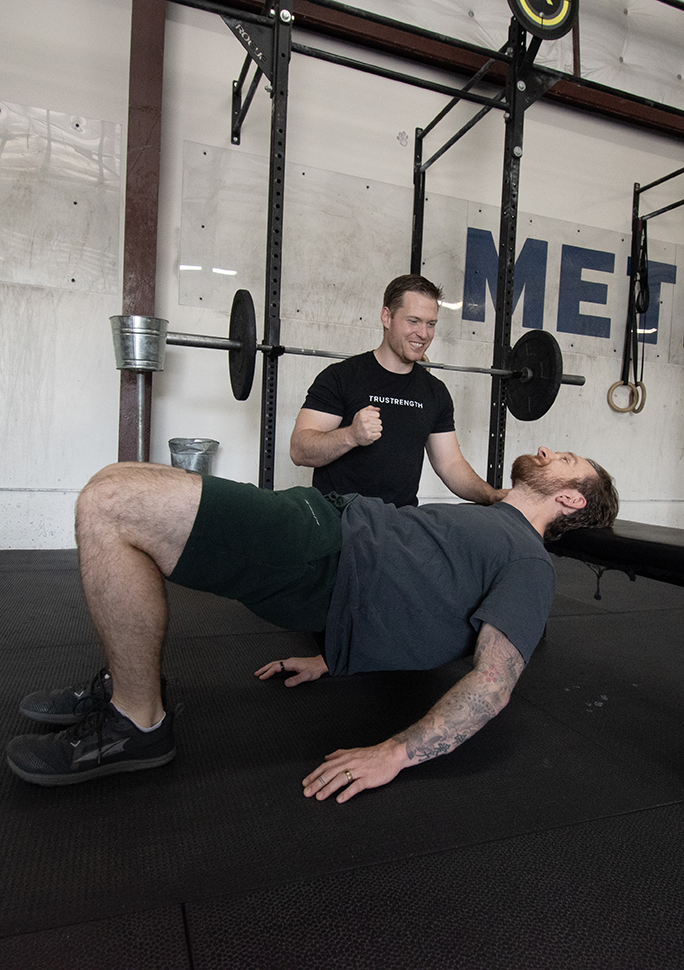
When you work hard to stay active, it feels brutal when an injury suddenly benches you from lifting, running, or playing your sport.
Return to sport rehab gives you a way to keep training while you heal, instead of sitting on the sidelines and hoping things sort themselves out.
Many active adults hear “just rest” with no clear plan and then watch their strength and confidence fade.
It is easy to start wondering if your best performance lives in the past instead of the future.
It does not have to look like that. With the right approach, you can adjust how you move, dial in your training load, and keep your identity as an athlete while your body rebuilds capacity.
This guide walks through what a modern return to sport path looks like for active adults in Denver who lift, run trails, play pickleball, chase fourteeners, or push hard in HIIT classes.
It focuses on simple frameworks you can use to train smarter, not just less.
You learn how to tell when it is safe to keep training, how to modify workouts without guessing, and how to think about pain in a way that supports real progress instead of fear.
The goal is to help you return to your sport with more clarity, more resilience, and a plan that respects both your body and your competitive drive.
What Return To Sport Rehab Really Means For Active Denver Adults
When most people hear the word rehab, they picture three sets of clamshells and instructions to skip the gym for weeks.
That kind of approach might protect against injury in the short term, but it often crushes your momentum and confidence.
Return to sport rehab takes a different path.
You still respect what hurts, but you keep training in a smarter, more targeted way so you do not lose your edge.
Instead of “stop running” or “no lifting,” the question shifts to “How can you still move today without making things worse?”
A good plan fits your sport, your season, and your actual goals, not a generic protocol that ignores how you like to train.
From “Do Not Do That” To “Here Is How You Can Keep Moving”
Many athletes hear some version of “If it hurts, stop doing it.”
That advice can feel safe, but it is also incomplete and often discouraging.
A better question is “What level and style of load feels okay right now?”
With that lens, you can keep moving while you rebuild tissue capacity and confidence.
That might look like:
- Swapping deep back squats for box squats with a slower tempo
- Moving from outdoor hill sprints to flat intervals on the Cherry Creek Trail
- Trading full pickleball games for controlled lateral drills and serves
- Scaling HIIT classes so lower body impact drops a bit while upper body and core still work hard
At TruStrength Performance & Rehab, the team uses a simple structure called The TruStrength Way.
This framework focuses on:
- Structure, how your joints, tissues, and posture handle load
- Mindset, how you think about pain, progress, and setbacks
- Movement, how you perform patterns like squat, hinge, lunge, push, pull, and rotate
- Capacity, how much work your body can handle in your sport
Instead of resting everything, you support the area that needs help and keep everything else strong.
This keeps your training identity alive while your body works through the recovery process.
Common Injuries That Still Allow Smart Training
Injury does not automatically mean fragile.
Often, it means your body is asking for a different approach to training.
Here are examples of issues that often still allow meaningful training with the right adjustments.

Knee Issues
Knee symptoms show up often in runners, lifters, hikers, and court sport athletes.
Conditions like runner knee, patellar tendon irritation, early arthritis, or a post-surgical rebuild can flare with deep bending or impact, yet still respond well to strength and controlled load.
Useful changes might include:
- Shortening squat depth or using a box to limit range
- Focusing on slow lowering phases instead of heavy and fast reps
- Using cycling, uphill walking, or pool running for conditioning
- Training glutes and hamstrings hard so they share the work with the knee
Back And Hip Pain
Back and hip pain can appear after heavy deadlifts, long drives, or a full ski weekend.
Many athletes get told to stop lifting or avoid bending, which rarely feels realistic.
Real progress comes from changing how your body handles those positions instead of avoiding them forever.
Helpful changes might include:
- Shifting from barbell deadlifts to trap bar or Romanian deadlifts
- Replacing heavy barbell back squats with front squats or goblet squats
- Adding anti-rotation and bracing drills so your core supports your hips and spine
- Breaking long runs into intervals with walk breaks on flatter sections
Shoulder And Elbow Issues
Overhead lifting, swimming, tennis, pickleball, and CrossFit-style workouts can stir up the shoulders and elbows.
That does not mean upper body training must disappear.
You can modify:
- Swap strict overhead presses for landmine presses or incline presses
- Change grip width on pressing and pulling to find a friendlier path
- Keep rows, carries, and lower range pressing in the mix
- Use tempo work to build control without chasing max loads
Foot And Ankle Problems
Trail running on rocky Front Range routes, long runs on concrete, or a rolled ankle in a rec league game can leave your foot or ankle angry.
Walking might still feel fine, or only certain distances and surfaces hurt.
Training around this can include:
- Using softer surfaces, such as Ruby Hill paths, instead of concrete
- Shortening run duration and adding more walk intervals
- Strengthening calves, feet, and hips while you dial back impact
- Cross-training with cycling, rowing, or ski erg to keep your engine strong
With each of these injuries, the idea is the same.
You stay active, but you change the stress on the irritated area while gradually teaching it to handle more again.
How To Know If You Are Ready To Start Return To Sport Rehab
You do not need a perfect body to begin a return to sport plan.
What matters is a clear sense of where you are today and what your body is telling you.
A simple traffic light system can help.
Green Light Signs
Green light signs suggest that continuing to train with smart modifications is reasonable.
These signs include:
- Mild discomfort that warms up and stays the same or improves as you move
- No sharp, catching, or locking sensations
- Soreness that settles to your normal baseline within about twenty-four hours
With these signs, most athletes keep training while making small adjustments to intensity, range, or volume.
Yellow Light Signs
Yellow light signs tell you to proceed with caution and consider expert guidance.
These signs include:
- Pain that ramps up during a workout and lingers into the next day
- Swelling that returns after impact or heavy load
- A recent flare that makes you feel nervous to push
With yellow light signs, the answer is usually to adjust, not stop.
You might pull back on intensity, change certain movements, or lower training volume while you figure out a better plan.
Red Light Signs
Red light signs signal the need for a thorough assessment before you keep training.
Examples include:
- Sudden and severe pain with a clear pop or trauma
- Significant swelling, buckling, or giving way
- Night pain that interrupts your sleep
- Dizziness or new neurological symptoms such as numbness or weakness
With red light signs, a qualified practitioner should examine you so you can rule out serious issues and build a plan that fits the real problem.
The Four Pillars Of A Strong Return To Sport Plan
A solid return to sport plan covers much more than a few stretches and band exercises.
It pulls together structure, mindset, movement, and capacity so you are not guessing from day to day.
You can think of it like this.
Structure is the foundation, mindset is the software, movement is the skill, and capacity is the engine.
You need all four if you want to come back stronger instead of just “back.”
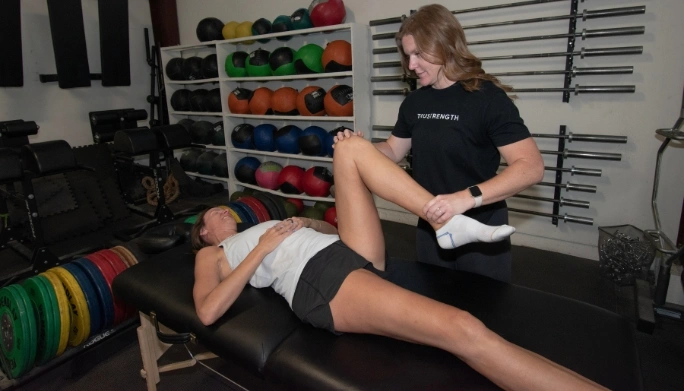
Pillar One: Structure, Understanding Your Body Baseline
Structure is about how your joints and tissues handle load in the real world. It is less about perfect posture and more about whether your system supports the specific demands of your sport.
A structural check might look at:
- How your ankles move during a deep squat or lunge
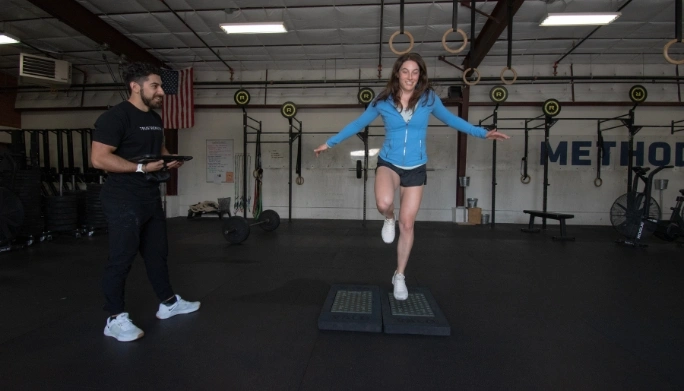
- Whether one hip drops during a single-leg stance
- If your shoulder has enough rotation for a stable overhead press or serve
- Whether your core and pelvic floor support you under a heavy bar or during a run
Different sports highlight different structural needs.
For example:
- Trail runners and fourteeners hikers need strong single-leg control and ankle mobility
- Lifters need hip and shoulder positions that support heavy loads without grinding
- Court sport athletes need hips, knees, and feet that tolerate quick cuts and deceleration
At TruStrength Performance & Rehab, assessments feel active and practical.
You are asked to move, jump, hinge, and squat so the team can see what actually needs work.
Pillar Two: Mindset, Shifting From Fear To Confidence
Mindset shapes every rep you take. When you brace in fear every time your knee twinges, your movement changes and often becomes more guarded and less efficient.
Common mindset patterns include:
- Avoiding a lift or drill you used to love, even when loads are light
- Constantly testing the painful area during daily life
- Assuming every flare means the injury is “back” or worse
A stronger mindset does not ignore pain.
It reads it.
Helpful questions include:
- Is this discomfort within my usual and acceptable range today
- Did I give my body enough recovery between hard sessions
- Is this a normal response to a new load, or a true warning sign
When you understand that some discomfort is part of rebuilding capacity, you stop panicking at every sensation.
That calm and informed approach often lowers muscle tension and helps symptoms improve.
Pillar Three: Movement, Modifying Not Stopping Your Training
Movement is where the shift from “benched” to “still training” becomes real. You keep your key patterns, such as squats, hinges, lunges, pushes, and pulls, but you change how they look, how far they go, or how heavy they feel.
You keep the skill alive but upgrade the strategy.
For Runners
If running stirs things up, it might not be the simple act of running that creates the issue. It can be pace, terrain, total volume, or intensity.
Useful adjustments include:
- Choosing flatter sections of Cherry Creek Trail instead of steep technical routes
- Slowing down to a conversational pace instead of chasing personal records every run
- Cutting total distance and adding structured walk intervals
- Running fewer days per week and filling the gap with cross-training, such as cycling or strength work
For Lifters
Lifting often stays in the plan during return to sport rehab, it just changes shape for a while.
The goal is to keep tension on muscles and joints while staying under your current capacity ceiling.
Helpful changes include:
- Using box squats, block pulls, or partial overhead pressing to modify range
- Changing stance and grip width or angle to find a friendlier path
- Slowing the lowering phase and adding pauses in stable positions
- Focusing on more moderate sets instead of constant heavy singles or max attempts
No one needs to guess their way back to running, lifting, pickleball, or fourteeners.
With a structured plan, objective progress markers, and a team that understands how much your sport matters, you can move from frustration to steady progress.
If you feel ready to start a clear return to sport plan and build toward stronger performance, call TruStrength Performance & Rehab at (720) 983 3665 to schedule a visit and begin that process.
For Court And Field Sports
Pickleball, tennis, soccer, and similar sports add cutting, deceleration, and unpredictable movement.
That combination can stress knees, ankles, and hips.
You can modify by:
- Focusing on planned footwork, serves, or volleys instead of full matches
- Playing on smaller spaces or half courts to lower total running
- Practicing technique at a lower speed, then adding intensity gradually
- Choosing consistent, even courts instead of rough or slippery surfaces
Across all these sports, the idea stays the same.
You stay connected to the skills that matter while steering away from the exact triggers that overload your system.
Pillar Four: Capacity, Progressively Loading Back To Sport
Capacity is your ability to handle work without a flare. It includes strength, endurance, speed, and tissue tolerance for impact or heavy load.
You build capacity by nudging your limits, not blasting through them.
A simple progression might move from:
- Isolated strength work, such as glute bridges, split squats, and tempo presses
- To integrated patterns such as squats, hinges, lunges, carries, and step-ups
- To low-level plyometrics such as small hops, pogo jumps, and gentle bounding
- To higher impact or sport-specific work, such as cutting, sprinting, heavy lifting, or longer runs
You can track capacity with clear markers, including:
- How many single-leg squats or heel raises you can do with good form
- How far you can run before symptoms appear, and how long they last
- How heavy you can lift within your symptom budget for the day
- How quickly you recover from a hard session
Instead of guessing, you use this data to decide when to push and when to hold.
Over time, your ceiling rises, and the activity that used to cause a flare becomes your new warm-up.
Staying In The Game While You Heal
Return to sport rehab is not just about exercises.
It is about staying connected to your sport and your community while your body works through the rebuilding process.
You keep your habits, your schedule, and your identity as an athlete.
The difference is that you change the dial on intensity, not flip the switch to off.
Training Around An Injury: Real World Examples
It can help to see what return to sport looks like in real life. Here are a few common patterns that active adults in Denver navigate.
The Lifter With A Cranky Shoulder
Imagine that overhead pressing or kipping pull-ups light up your shoulders. Many lifters fear that this means the barbell has to disappear.
Instead, a smart plan might:
- Shift pressing to landmine variations, push-ups, and rows that feel strong and controlled
- Train lower body intensely with squats, deadlifts, and hinges that respect your current comfort level
- Build core strength and carries so your trunk stays solid for future heavy pressing
The Trail Runner With Achilles Pain
Downhill on rocky Front Range trails leaves your Achilles tight and sore.
There is a real worry that one more run will push things over the edge.
A better approach could:
- Move part of your weekly mileage to flat or slightly uphill routes
- Mix run and walk intervals to lower total tendon stress
- Add calf strength, hip strength, and foot drills on non-run days
- Use cycling or rowing for extra conditioning while you build tolerance
The Pickleball Player With Knee Pain
Pickleball games at local courts are the highlight of your week, but your knee swells after long matches. The idea of stopping play altogether feels like too big a loss.
A more balanced plan might:
- Limit match duration and introduce more planned breaks between games
- Spend time on drills that build footwork, reaction, and paddle skills without constant cutting
- Strengthen hips, hamstrings, and quadriceps in the gym so your knee feels more supported during play
In each story, training stays in your life.
The sport remains part of your identity while you work on key weak links.
Return To Sport Rehab For Postpartum And Women Health
For postpartum athletes, returning to sport involves much more than a healed incision or a six-week clearance.
Core strength, pelvic floor function, and overall energy all matter.
Leaking with double unders, pelvic heaviness after runs, or deep core fatigue after lifting are signals that your system needs support, not reasons to give up.
A thoughtful postpartum return to sport plan might include:
- Pelvic floor and deep core work that matches your lifting, running, or HIIT goals
- Gradual progressions from walking to run walk intervals to continuous runs
- Smart load progressions for squats, deadlifts, and presses so your abdomen and pelvic floor stay supported
- Education on breath, bracing, and pressure so you can lift heavy without leaks or pain
TruStrength Performance & Rehab has women health and pelvic floor specialists who understand that many postpartum athletes want to get back to deadlifts, trail runs, and demanding classes.
The goal is not to keep you fragile, it is to help you build a system that can handle the demands you love.
Masters Athletes And Busy Parents: Time-Efficient Rehab
If you juggle kids, work, and training, long separate rehab visits can feel impossible. You need focused sessions that combine the most important pieces of rehab and performance.
Time-efficient return to sport work focuses on the big rocks that move the needle.
That often looks like:
- A thirty to forty-minute session that blends warm-up, key rehab drills, and strength work
- Short, targeted mobility work focused on the exact bottlenecks that hold you back
- Strategic conditioning that respects your current capacity but still challenges you enough to improve
You do not need a perfect schedule to make progress.
You need consistency and clear priorities that fit your season, your family schedule, and your energy.
TruStrength Performance & Rehab is set up with early, late, and some weekend options to match that reality.
Tools That Can Speed Your Progress When Used Well
Hands-on techniques and recovery tools do not replace smart training, but they can help you train more effectively. They often help calm symptoms so you can do the work that truly rebuilds capacity.
At TruStrength Performance & Rehab, the team may incorporate:
- Dry needling or soft tissue work to reduce muscle guarding around a painful area
- Joint mobilization or manual work to open up a restricted region before strength training
- Cupping or massage to manage tightness between sessions
- Functional nutrition counseling to dial in protein, hydration, energy, and recovery
These tools work best when they sit inside a bigger plan based on movement practice and progressive loading. They are the assist, not the entire play.
When structure, mindset, movement, and capacity all come together, return to sport rehab stops feeling like punishment.
It becomes a clear, athlete-focused path back to doing what you love, with more resilience than before the injury.
How TruStrength Helps You Return To Sport Without Losing Your Edge
You probably do not want to feel like a passive case, you want a coach in your corner who understands your sport.
At TruStrength Performance & Rehab, practitioners work with you one-on-one, so you receive individual attention instead of a generic sheet of exercises.
In each session, the focus stays on a clear plan that blends hands-on support, strength training, and sport-specific drills.
You learn what to do in the gym, on the trail, or on the court so you can keep training with intention instead of guesswork.
The team anchors everything in The TruStrength Way, the framework of Structure, Mindset, Movement, and Capacity.
This approach helps you understand what is going on, stay mentally strong, move better, and steadily build what your body can handle in your real sport.
Whole Athlete Support From Pelvic Floor To Performance
Your body does not live in separate compartments, and your plan should not either.
The TruStrength team looks at how strength, mobility, pelvic floor function, nutrition, sleep, and stress all affect your performance and recovery.
For postpartum athletes, the plan can combine pelvic floor work, core strength, and gradual loading so running and lifting feel supported rather than scary.
For masters athletes with a grumpy knee or back, the focus often shifts to joint-friendly progressions that protect joints while you keep chasing personal goals.
To support that full picture, TruStrength can use tools such as:
- Dry needling and manual therapy to calm irritated areas so training feels better
- Cupping and massage to ease tightness between sessions
- Functional nutrition counseling to dial in energy, recovery, and inflammation
The goal is simple and bold, to help you build a body that can do more for longer, not just survive the next race or season.
Built For Busy Denver Lives: Flexible And Transparent
Active Denver life is full, with work, families, community events, and training all in the mix.
TruStrength Performance & Rehab respects that reality and shapes care around it.
The clinic offers early morning and after-work sessions, plus select weekends across North Denver, Ruby Hill, Hampden, Whittier, and Centennial.
You can also mix in-person visits with telehealth check-ins, so your plan keeps moving even when your week gets hectic.
TruStrength stays out of network on purpose in order to provide longer one on one sessions and real coaching. Pricing is transparent, and many clients use out-of-network benefits, health savings accounts, or flexible spending accounts to help with costs.
Your Next Step: Start Your Return To Sport Plan
If you have read this far, there is a good chance your pain feels like more than a minor annoyance.
You probably want a clear, athlete-focused plan that lets you keep training while you rebuild.
To help you start, TruStrength Performance & Rehab offers several ways to plug in, including:
- Complimentary 30 Minute Injury Screening and Movement Assessment
- New Patient Special: 20 Percent Off Your First Comprehensive Physical Therapy Evaluation
- Free 15 Minute Sports Performance and Return To Sport Consultation
- Introductory Women’s Health and Pelvic Floor Screening With A Specialist
- Functional Nutrition Discovery Call and Customized Recovery Nutrition Plan
- First Time Client Dry Needling and Manual Therapy Trial Package
- One Week Trial Of The Progressive Training While You Recover Program
No one needs to guess their way back to running, lifting, pickleball, or fourteeners.
With a structured plan, objective progress markers, and a team that understands how much your sport matters, you can move from frustration to steady progress.
If you feel ready to start a clear return to sport plan and build toward stronger performance, call TruStrength Performance & Rehab at (720) 983 3665 to schedule a visit and begin that process.