


You train hard, you have goals on the calendar, and you do not have time to sit on the sidelines.
If tight calves, a cranky shoulder, or a stubborn low back keep slowing you down, you have probably already searched for trigger point dry needling in Denver, looking for something that actually helps.
Maybe you have tried resting, stretching, or foam rolling, and it takes the edge off, but the same spot flares every time you ramp training.
Or you have been told to just stop running or lay off lifting with no real plan to keep you moving.
Dry needling is one tool that can help calm those overworked muscles and hot spots so you can get back to training with more confidence.
In this article, you will see what trigger point dry needling is, how it works for active adults and athletes, what to expect in a session, and how it fits into a bigger performance plan instead of acting as a quick but temporary fix.
What Is Trigger Point Dry Needling For Active Adults And Athletes
Trigger points are those tight, rope-like spots you feel when you dig into a sore calf, upper trap, or glute.
They can create sharp local pain, or they can send pain somewhere else, such as a glute trigger point that makes your hamstring feel tight every time you sprint or hike.
These points often build up when you stack training on top of daily stress. Long hours at a desk, poor sleep, sudden jumps in mileage or lifting volume, and postural changes in pregnancy and postpartum can all feed into the problem.
Your body tries to protect you by keeping certain muscles on guard.
That might look like a stiff low back on the first mile at Ruby Hill that warms up, then locks again later, or calves that grab on every hill repeat no matter how much you stretch.
You might also notice a shoulder that feels fine during warm-up but aches after overhead work or serves. These patterns are all common signs that trigger points are driving stubborn tension and discomfort.
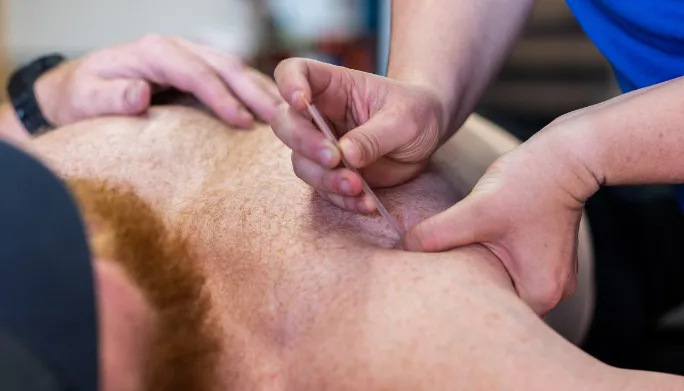
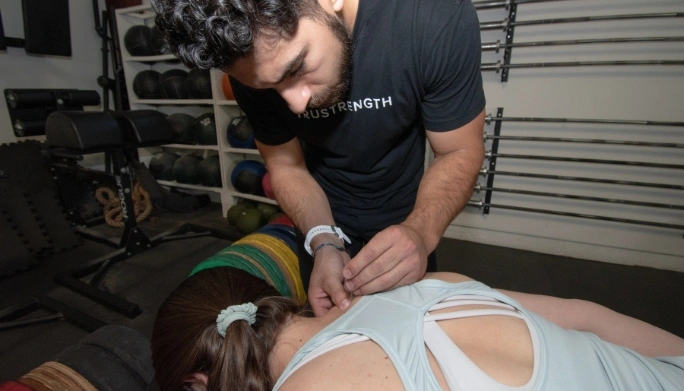
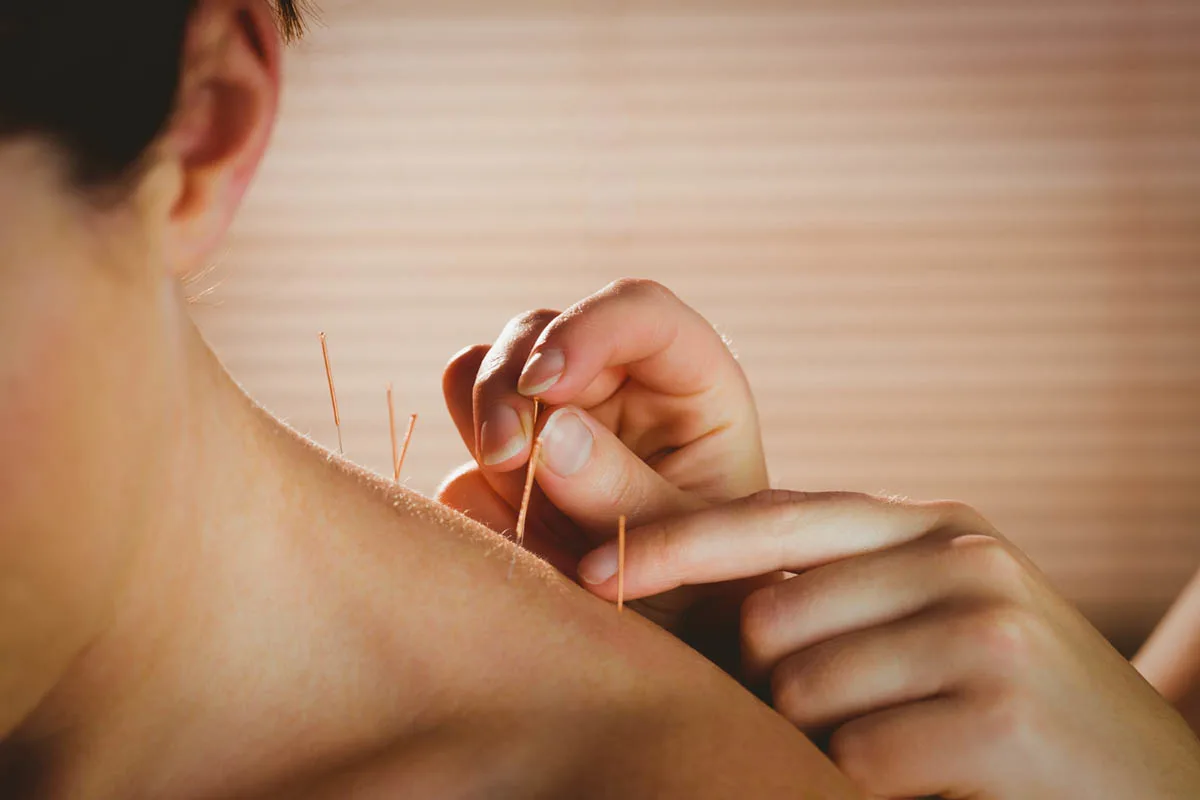
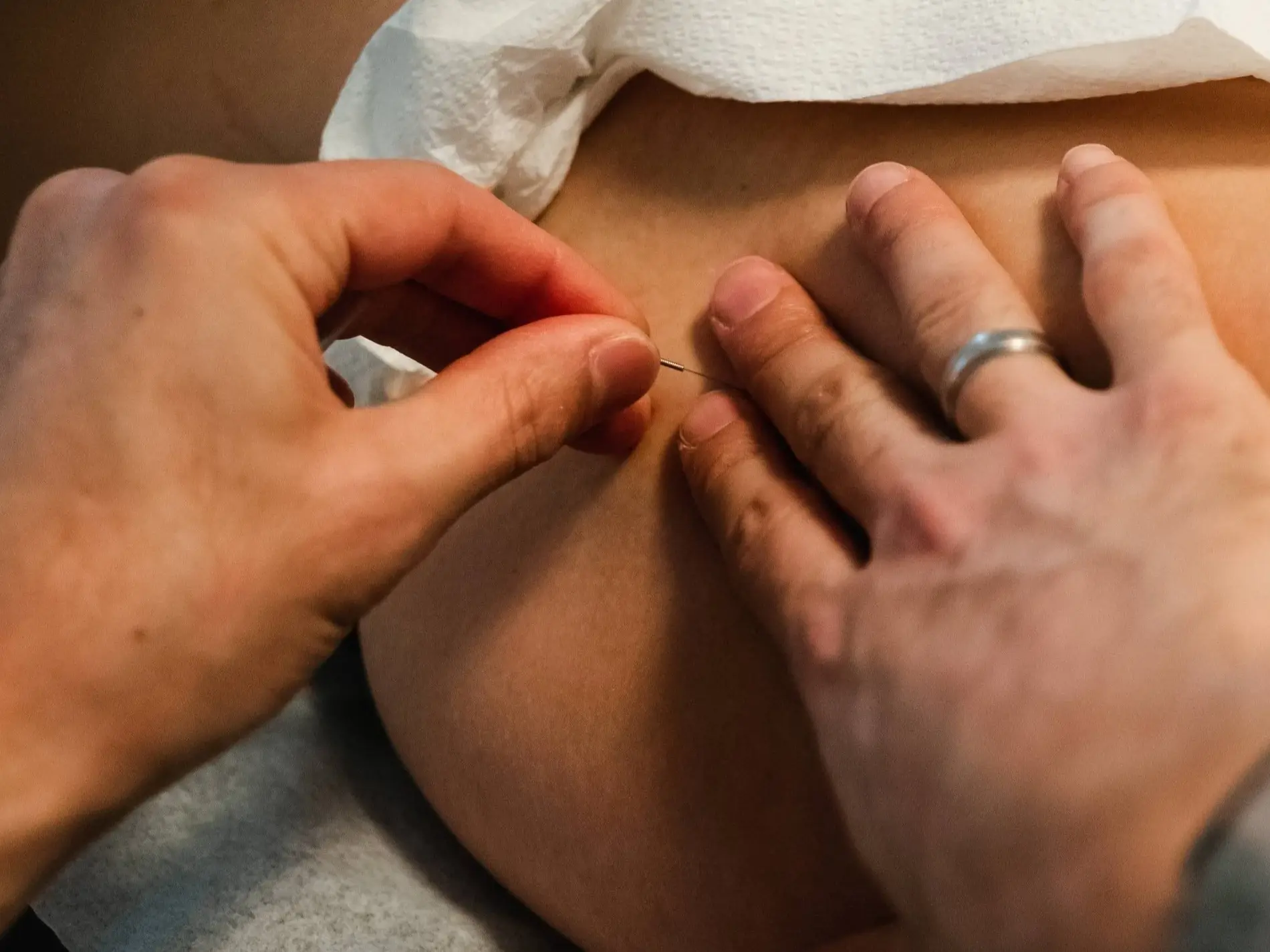
Trigger point dry needling uses a very thin filament needle to reach those overactive spots directly.
The goal is to help that guarded muscle relax so you can move more freely and actually gain value from your strength and mobility work.
How Trigger Point Dry Needling Works In Plain English
In a dry needling session, the practitioner first finds the trigger point with their hands.
You may already know the exact spot that lights up when you press on it.
Then a thin, solid needle goes into that point for a brief period.
You might feel a quick cramp or twitch in the muscle, a dull ache that fades out, or a sense of the area letting go afterward.
That twitch response is your muscle’s way of resetting itself. The needle input can reduce excessive muscle tension, improve local blood flow, and calm sensitive nerves in the area.
You are not getting any medication through the needle. The change comes from how your muscle tissue and nervous system respond to the stimulus.
Right after needling, many people feel looser or lighter, almost like they just finished a focused mobility session.
This creates a short window where strength drills, mobility work, and good movement patterns feel easier to access.
Dry Needling Versus Acupuncture
Dry needling and acupuncture both use thin needles, but they come from different backgrounds and serve different goals.
Acupuncture is rooted in Traditional Chinese Medicine and often focuses on energy channels and systemic balance in the body.
Trigger point dry needling in a sports and rehab setting focuses on specific muscles and trigger points.
The focus is on pain and tightness that relates to movement, posture, and load, and on helping you get back to your sport with a clear plan.
If you have used acupuncture before, dry needling may feel familiar in some ways and very different in others.
The conversation is usually about tissues, strength, and movement patterns, not meridians.
Dry Needling Versus Other Muscle Recovery Tools
You probably already have a recovery toolbox.
Foam rolling, massage guns, lacrosse balls, stretching, and occasional massage or cupping all play a role in how your body feels.
Those tools matter, but they often work more broadly across a region.
Dry needling lets a practitioner target very specific trigger points that are hard to reach with compression alone, such as deep hip rotators under your glutes or small stabilizers around your shoulder blade.
Here is how it compares to other tools in a simple way.
Foam rolling can be great for general tissue tolerance, but it is less precise for a single trigger point. Massage can help circulation and muscle tone, and can pair well with needling when the plan calls for it.
Cupping creates decompression and blood flow, and it can also work nicely alongside dry needling.
Stretching improves the range of motion once muscles are ready to lengthen, which often happens more easily after you address trigger points.
The most important idea is that dry needling is one tool, not the whole program. The best results usually happen when you combine it with smart strength, mobility, and load management instead of using it as a standalone fix.
Who Can Benefit From Trigger Point Dry Needling In Denver
Lifters, CrossFit Athletes, And HIIT Fans
If you love a barbell or a fast-paced workout, you know how quickly tight can turn into irritated. The usual hotspots for lifters and high-intensity athletes tend to show up in a few familiar places.
Common areas include shoulders with overhead presses, snatches, and jerks, hips and low back with heavy squats and deadlifts, and elbows and forearms with gripping, pull-ups, and kettlebell work.
These regions carry a lot of load and often respond by locking down.
Dry needling can help dial down the muscle guarding that builds up around these patterns. That makes it easier to get into better positions under the bar and to tolerate accessory work that actually fixes weak links.
With less guarding, you can progress the load again without the same flare after every training day.
For HIIT and Orange Theory style classes, needling can support recovery so you do not just push through stiff hips and shoulders every time the clock starts.
Runners, Hikers, And Mountain Athletes
Denver runners and hikers ask a lot of their legs. Between the Cherry Creek Trail, local parks, and weekend fourteener missions, your calves, feet, and hips rarely get a full break.
Dry needling often helps with several very specific patterns.
These include calf trigger points that nag your Achilles or plantar fascia, tight quads and hip flexors that tug on your kneecap with downhill running, and glute or TFL trigger points that make your IT band feel like a steel cable.
When those overworked muscles settle down, it becomes easier to hold better form as you fatigue.
You can build strength in the right muscles instead of just feeling tight all the time.
You can also maintain some running or hiking while you adjust volume and terrain in a smarter way.
Instead of just telling you to stop running, a good plan uses dry needling to calm the flare while your program shifts to reduce overload.
Pickleball, Tennis, And Other Court Sports
If you spend time on the courts at places like Wash Park or neighborhood clubs, your body repeats quick, powerful motions all week.
Serving, overhead shots, lunges, and changes of direction place a lot of demand on certain tissues.
The usual suspects include shoulder and rotator cuff tension with serves and overheads, forearm and elbow pain from gripping and repeated swings, and hip and low back stiffness with lunges and quick pivots.
These can start as mild annoyances and then build into real limitations.
Trigger point dry needling can address the specific muscles that control those motions, such as the rotator cuff, forearm flexors, deep hip rotators, and spinal stabilizers. Once those areas calm down, you can groove better mechanics with your coach and load strength work that protects your joints.
That combination helps you handle more play without paying for it later that night.
The goal is not just fewer flare-ups, it is also smoother power, better rotation, and more enjoyable matches.
Postpartum And Women’s Health
Pregnancy and postpartum change how you hold and move your body.
You might notice new tension in your neck, upper back, hips, and low back, often on top of pelvic floor symptoms.
Dry needling can be one part of a broader postpartum plan that also includes pelvic floor and deep core retraining, breath and pressure strategies for lifting and running, and gradual strength work so you can return to the activities you love.
Common postpartum needs that may benefit from needling support include upper trap and neck tension from feeding and holding baby, low back and hip tightness after pregnancy and delivery, and deep glute or hip flexor trigger points that limit your stride or squat depth.
These areas often carry the load when your system is adapting to new demands.
Safety and timing matter a lot in this season. That is why it helps to work with a practitioner who understands pregnancy, postpartum, and pelvic health, not just generic sports rehab.
Masters Athletes And Busy Parents
You might sit at a desk all day, coach your child’s team at night, and then try to squeeze your own training into the gaps. That schedule often leads to very predictable patterns of tension and fatigue.
These may include stiff hips and low back when you stand after working, shoulder or neck tightness with pressing or overhead work, and knees that feel rusty on the first few steps, especially on stairs.
Over time, these nagging issues can chip away at your consistency.
Dry needling helps reduce that baseline tension, so your strength and mobility work have a better starting point. It supports you as you train in shorter, more efficient blocks and do targeted strength work that is realistic for your week.
For masters athletes, the long game matters. The goal is not only to get through today’s workout, it is to keep running, lifting, skiing, and playing with your kids or grandkids for years.
If you are curious whether trigger point dry needling fits your next training block, you do not have to guess.
You can start with a low-pressure option that matches where you are right now and what you need most.
TruStrength Performance and Rehab currently offers:
- Complimentary 30 Minute Injury Screening And Movement Assessment
- New Patient Special: 20 Percent Off Your First Comprehensive Physical Therapy Evaluation
- Free 15 Minute Sports Performance And Return To Sport Consultation
- Introductory Women’s Health And Pelvic Floor Screening With A Specialist
- Functional Nutrition Discovery Call Plus Customized Recovery Nutrition Plan
- First Time Client Dry Needling And Manual Therapy Trial Package
- One Week Trial Of The Progressive Training While You Recover Program
Bring your training log, your Strava data, or your coach’s program.
We will look at what your body is telling you, how your schedule really works, and where dry needling plus smart loading can move the needle for your performance and your daily life.
If you are ready to take the next step, call TruStrength Performance and Rehab at (720) 983 3665, and we will help you find the best starting point for your goals.
What To Expect From Trigger Point Dry Needling Sessions
Your First Visit: Assessment Before Needles
A good dry needling session starts with a clear assessment. You will talk through your training, your injury history, and your current goals, such as a race date, ski trip, or postpartum milestone.
Then your practitioner looks at how you move.
They may assess strength on key lifts or single-leg tasks, range of motion at joints that feel restricted, and how your body handles basic patterns such as squat, hinge, push, pull, and carry.
Only after that do you decide together whether dry needling makes sense on day one. Sometimes you start with other tools first, and other times, needing early can open the door for better movement the same day.
What It Feels Like During And After
Most people are surprised by how quick each needle input is. You may feel a small pinch as the needle enters, a brief twitch or cramp in the muscle, or a dull, heavy feeling in the area that fades after a few breaths.
Right after the session, it is common to feel soreness like you did a focused strength workout for that muscle, along with looser, lighter movement in that region.
You may notice that your usual tight spot does not grab as quickly.
You usually can move and walk out the door right away.
Many people head to work, run errands, or do light training later that day, following the plan you and your practitioner set.
Safety, Credentials, And When Dry Needling May Not Be A Fit
Dry needling is a skilled technique. You want it performed by a licensed physical therapist who has specific training in dry needling and understands your sport and goals.
Before any needle goes in, your practitioner should ask about your health history and medications, talk through benefits and potential side effects, and make sure you are comfortable with the plan and areas of focus.
This helps you feel clear and in control of your care.
Dry needling might not be right for you if you have certain medical conditions, are not comfortable with needles, or are at a stage of pregnancy where your provider advises against it. In those cases, you can still make great progress with hands-on work, exercise, and other strategies.
How Many Sessions Do Active Adults Usually Need
The number of sessions depends on your situation. A fresh calf strain before a ten-kilometer race is very different from a five-year history of shoulder tightness from swimming and lifting.
In general, people often notice some change within a few visits.
Simpler, newer issues may shift in one to three sessions, while more chronic or complex patterns may take four to six or more sessions within a larger plan.
Progress builds faster when you also adjust your training plan instead of repeating the same stress, and when you do targeted strength and control work between visits.
Taking care of basics like sleep, hydration, and nutrition also supports better outcomes.
Think of dry needling as a way to speed up progress while you also fix the underlying reasons your body keeps guarding.
It is not meant to replace strength training or smart programming, but to work alongside them.
How Trigger Point Dry Needling Fits Into A Bigger Performance Plan
The TruStrength Way: Structure, Mindset, Movement, Capacity
At TruStrength Performance and Rehab, dry needling mainly works at the Structure level. It helps muscles, fascia, and local nerves behave more like you need them to, so you can move with less resistance.
Once that structure calms down, it is easier to build a better Mindset around what your body can do and to clean up Movement patterns such as your squat, stride, or overhead press.
From there, you can expand your Capacity with smart strength and conditioning that lines up with your goals.
In other words, dry needling can open the door. Your training plan and daily choices decide how far you walk through it.
Staying Active While You Heal
Most athletes shut down mentally if someone says to stop all activity. In many cases, you do not need that kind of full stop to make progress.
A thoughtful plan uses dry needling alongside specific training adjustments.
These might include changing weights, reps, or pace, choosing versions of lifts or runs that do not flare symptoms, and trimming just enough volume to let tissues recover.
For example, a runner with calf issues might shift to more strength and incline walking while needing to calm trigger points.
A lifter with shoulder irritation might reduce overhead volume, add pulling strength, and use needling to ease rotator cuff tension.
You stay an athlete the whole time. You simply train smarter for a while as your body adapts and gains resilience.
Combining Dry Needling With Strength, Mobility, And Recovery Habits
Dry needling often works best when you follow it with movement that reinforces the change.
That might look like hip strength drills after glute needling, shoulder blade control work after rotator cuff needling, or foot and calf strength after lower leg needling.
Outside of the clinic, your results stick better when you dial in your basics.
Strength work that targets your weak links, daily movement breaks if you sit for work, and recovery habits like enough sleep and solid nutrition all help your body take advantage of what dry needling starts.
Sometimes, your plan also includes manual therapy, cupping, massage, pelvic floor work, or nutrition support.
The goal is not to stack random services but to choose the right mix for your sport, your season, and your life.
Real World Scenarios From Denver Athletes
Picture a desk working trail runner who lives for weekend summits.
Every training block, their calves tighten at the same mileage, and they limp through the workweek after long runs.
With a few weeks of dry needling, focused calf and foot strength, and a smarter build in volume, they hold form longer on climbs and recover faster between long efforts. Their training feels productive instead of like a constant negotiation with their lower legs.
Or think about a postpartum lifter who wants to get back to barbell squats and deadlifts.
Her low back and hips tighten every time she increases load, and she starts to doubt her body.
With pelvic floor and core strategies, targeted hip and back needling, and a progressive strength plan, she returns to heavy lifting with more control and less fear of the next flare. The bar feels like a challenge again, not a threat.
Another example is a pickleball athlete with nagging elbow pain and a stiff shoulder during league play in Centennial.
By using dry needling for the forearm and rotator cuff, then adding grip strength, shoulder control, and small changes in paddle technique, this athlete keeps their schedule and enjoys matches without dreading the next morning.
These are the kinds of situations where trigger point dry needling becomes a powerful part of a bigger strategy.
You are not just chasing pain, you are building a body that can handle the way you actually live, train, and play in the Denver metro area.
Trigger Point Dry Needling Denver For Your Next Training Block
How TruStrength Supports Denver’s Active Community
You do not want to feel like a number on a schedule.
You want to feel like an athlete with a real plan that respects your goals and your life.
At TruStrength Performance and Rehab, we build that plan around one-on-one, evidence-based sessions that connect the clinic to the gym. We use tools like trigger point dry needling, manual therapy, cupping, massage, and progressive strength work to support real, lasting change, not just short-term relief.
We also look at the whole picture so you can keep training while you heal.
That might include sport-specific physical therapy and return to sport programming, dedicated postpartum and pelvic floor support for runners, lifters, and active parents, and functional nutrition coaching when recovery, energy, or hormones feel off.
Our team understands what it feels like to train for fourteeners, chase PRs, prep for ski season, or get back to lifting after baby.
We meet you in that mindset and help you move from doubt to I trust my body again.
How To Know If Trigger Point Dry Needling Belongs In Your Plan
You might be a good fit for dry needling as part of your plan if certain patterns sound familiar.
The same muscle group flares every time you increase load or mileage, stretching helps for a bit, but tightness snaps back quickly, or you feel stuck in a cycle of guarding around your shoulder, hip, or low back.
Dry needling matters most when it unlocks progress you can keep through strength, skill work, and smarter training. If we believe a different route will serve you better, we will say that clearly and help you understand why.
Our job is to help you choose the right mix of tools for your goals.
Your job is to show up ready to work and ready to stay curious about what your body can do.
Next Steps: Try Trigger Point Dry Needling As Part Of A Bigger Strategy
If you are curious whether trigger point dry needling fits your next training block, you do not have to guess.
You can start with a low-pressure option that matches where you are right now and what you need most.
TruStrength Performance and Rehab currently offers:
- Complimentary 30 Minute Injury Screening And Movement Assessment
- New Patient Special: 20 Percent Off Your First Comprehensive Physical Therapy Evaluation
- Free 15 Minute Sports Performance And Return To Sport Consultation
- Introductory Women’s Health And Pelvic Floor Screening With A Specialist
- Functional Nutrition Discovery Call Plus Customized Recovery Nutrition Plan
- First Time Client Dry Needling And Manual Therapy Trial Package
- One Week Trial Of The Progressive Training While You Recover Program
Bring your training log, your Strava data, or your coach’s program.
We will look at what your body is telling you, how your schedule really works, and where dry needling plus smart loading can move the needle for your performance and your daily life.
If you are ready to take the next step, call TruStrength Performance and Rehab at (720) 983 3665, and we will help you find the best starting point for your goals.